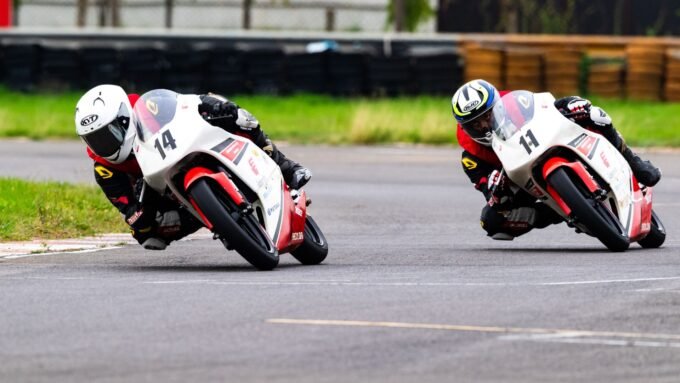
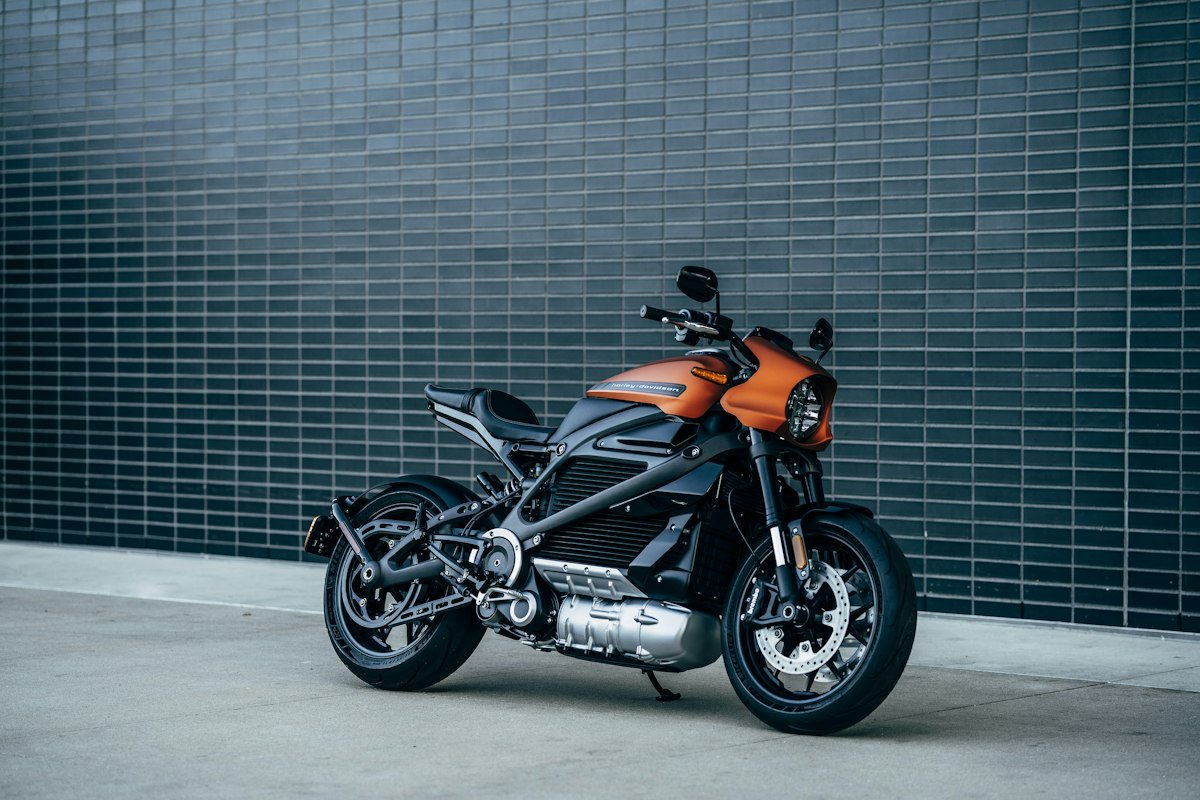
At the Kari Motor Speedway in Coimbatore, where four decades of two-stroke and internal combustion roar have defined Indian motorcycle racing, an eerie, jet-like whine now accompanies motorcycles blitzing down the 800-meter front straight at speeds exceeding 200 km/h (124 mph).
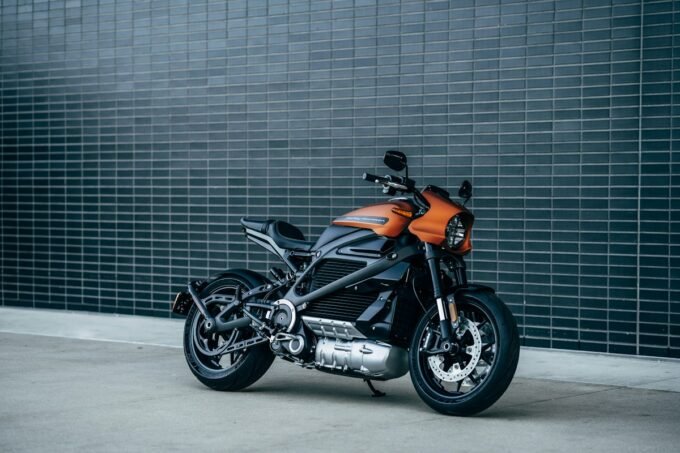
That sound belongs to the TVS Apache RTE—the bespoke electric racing motorcycle developed by TVS Racing for the landmark TVS Electric One Make Championship (e-OMC).
As India’s very first official factory electric road-racing series sanctioned by the Federation of Motor Sports Clubs of India (FMSCI), the championship represents a multi-million-rupee technological gamble by TVS Motor Company to prove that high-performance electric powertrains can survive the thermal crucible of circuit road racing.
According to technical benchmarks reported by CarAndBike TVS Apache RTE Report, the Apache RTE is not only the most advanced electric motorcycle in South Asia, but currently stands as the fastest production-derived racing machine ever built by the Hosur factory.
TVS Apache RTE Electric Race Bike: Technical Specification Matrix
| Component Subsystem | Production Electric Commuter (TVS iQube) | TVS Apache RTE Factory Race Prototype | Racetrack Performance Impact |
|---|---|---|---|
| Powertrain Motor | Hub-mounted BLDC Motor (4.4 kW) | Mid-Mounted Liquid-Cooled PMSM Motor (~60 kW / 80 BHP) | Delivers instant 120 Nm torque from 0 RPM down the straight |
| Battery Pack Architecture | 52V 3.4 kWh Air-Cooled Lithium-Ion | High-Density Liquid-Cooled Custom Pack (Carbon Casing) | High continuous C-rate discharge without thermal degradation |
| Chassis / Frame Design | Tubular steel underbone scooter chassis | Cast Aluminum Trellis with Battery Pack as Stressed Member | Extreme torsional stiffness with centralized center of mass |
| Bodywork & Fairings | High-impact ABS plastic fairings | Full Pre-Preg Autoclaved Carbon-Fiber Aerodynamic Shell | Substantial weight shed; optimized wind-tunnel drag profile |
| Suspension Hardware | Basic telescopic forks / twin rear shocks | Custom Ohlins Upside-Down Race Forks & Ohlins Monoshock | High-speed bump control over Kari's bumpy kerb transitions |
| Wheel & Tire Hardware | 12-inch steel rims / road commuter tires | 17-inch Forged Carbon-Alloy Wheels / Pirelli Supercorsa SC1 | Ultra-low rotational unsprung mass and 58-degree lean grip |
Thermal Management: Surviving the 8-Lap Heat Soak
The supreme engineering hurdle in electric motorcycle racing is not generating peak power, but managing thermal runaway. Under wide-open throttle at Kari, an 80-horsepower electric motor draws hundreds of amperes from the battery pack, generating massive resistive Joule heating ($I^2R$).
In high ambient Tamil Nadu heat (often exceeding 38°C / 100°F), conventional air-cooled battery cells would hit their 60°C thermal protection threshold within two laps, triggering automatic power derating.
TVS Racing engineers solved this through advanced dual-circuit liquid cooling:
- The Glycol Inverter Loop: A dedicated cooling loop circulates chilled glycol through the MOSFET power transistors in the custom inverter, keeping switching temperatures below 85°C.
- Dielectric Immersion Cell Cooling: The cylindrical lithium cells are encased in a proprietary thermal paste matrix connected to aluminum cooling jackets, evacuating heat directly to a front-mounted race radiator.
Regulating Regenerative Braking at 55-Degree Lean Angles
Unlike internal combustion engines with mechanical slipper clutches, an electric motor can deliver instantaneous reverse electromagnetic braking torque.
However, if aggressive regenerative braking occurs while the rider is leaned over at a 55-degree angle in Kari’s Turn 3 chicane, the sudden torque spike would instantly break rear tire traction, causing a violent lowside crash.
TVS developed a lean-angle-sensitive Electronic Braking Control (EBC) algorithm:
- Straight-Line Braking: When the motorcycle is upright, maximum regenerative braking engages, generating up to 25 kW of electrical recharge while assisting the front Brembo calipers.
- Trail-Braking to Apex: As the onboard six-axis Inertial Measurement Unit (IMU) detects increasing lean angle, regenerative torque tapers linearly to zero, allowing the rider to trail the front brake smoothly without disturbing rear-axle chassis balance.
From Track Prototype to Commercial Showroom DNA
For TVS Motor Company, the Apache RTE is the technological spearhead for its upcoming line of high-performance commercial electric two-wheelers.
By pushing battery chemistry, lightweight carbon composites, and high-output PMSM electric motors to their absolute mechanical breaking points in competitive national championships, TVS is ensuring that India's electric mobility future is forged on the racetrack, not in a PowerPoint presentation.
Source: CarAndBike TVS Apache RTE Report