The Aerodynamic Dilemma of Modern Premier-Class Racing
Over the past five seasons, MotoGP has undergone an intense aerodynamic transformation. Ground-effect fairings, downwash ducts, and complex multi-element front winglets now generate hundreds of kilograms of downforce at 350 km/h. While this aerodynamic grip stabilizes front-end wheelies on acceleration and shortens braking distances into apexes, it has introduced a severe engineering paradox: the creation of a boiling, turbulent aerodynamic wake behind every premier-class prototype.
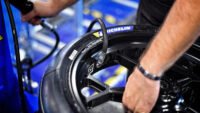
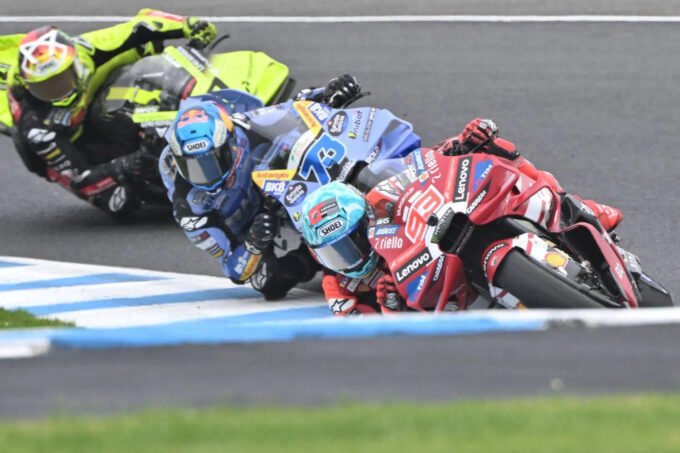
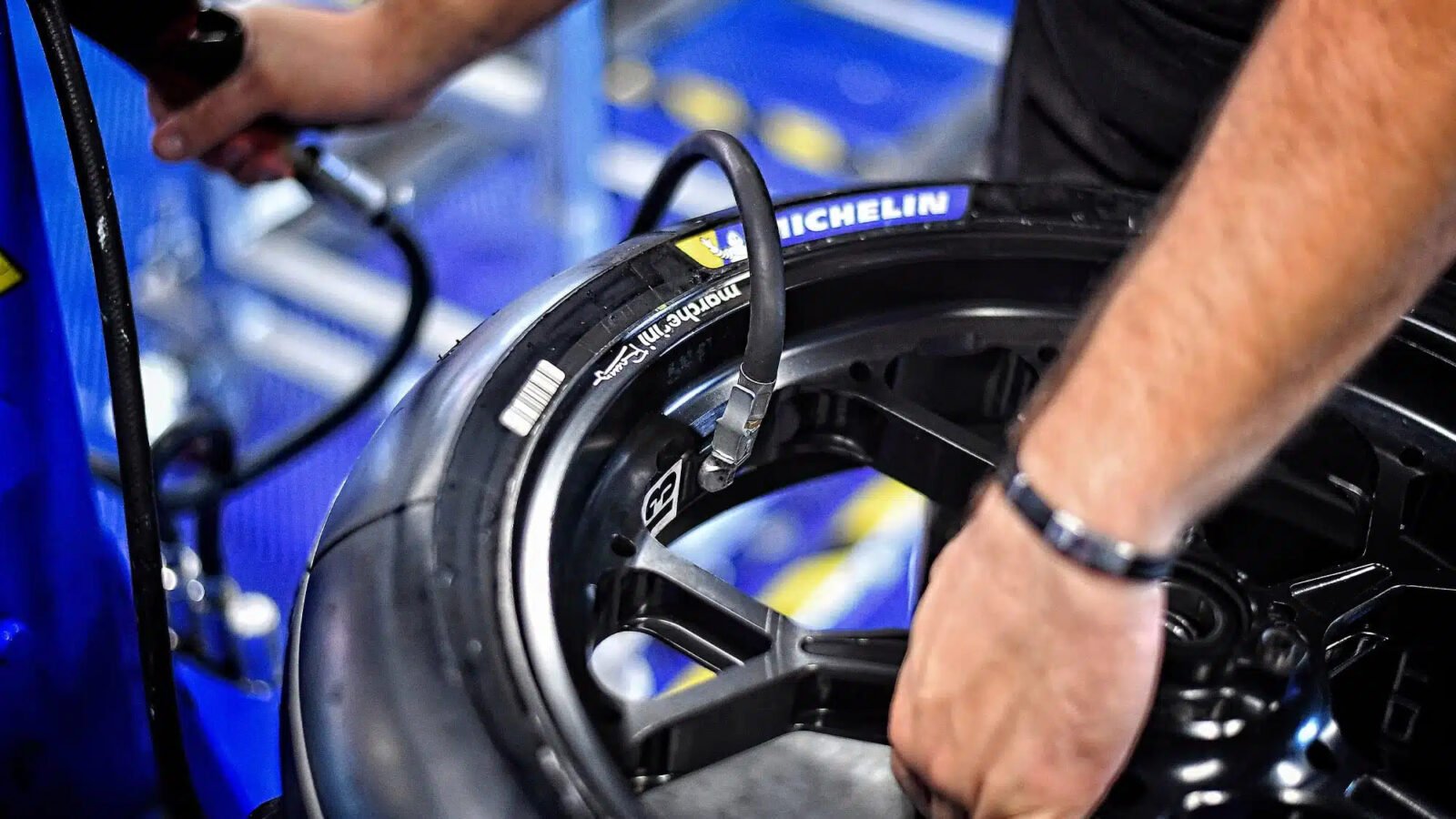
When a rider follows within one second of a rival, the radiator wash and aerodynamic wake deprive the trailing bike of cooling airflow. Front tyre surface temperatures surge from their nominal 90°C operating window past 115°C, heating the air contained inside the rim and causing internal tyre pressures to spike rapidly. To combat dangerous tyre delamination while maintaining competitive racing, official tyre supplier Michelin and the FIM instituted a strict minimum tyre pressure regulation that has become one of the most contentious technical battlegrounds in the paddock.
Lowering the Threshold to 1.80 Bar and Time Penalties
Prior to the 2024 season, Michelin enforced a rigid front tyre minimum threshold of 1.88 bar (27.26 PSI). Running below this threshold for more than 50% of a Grand Prix distance originally carried the threat of instant disqualification. However, riders vociferously protested, arguing that starting a race with high base pressure to avoid penalties made the front tyre balloon into a rock-hard sphere whenever they got trapped in slipstreams, causing sudden loss of front-end grip and catastrophic crashes.
Recognizing the safety risks, Michelin and the Grand Prix Commission revised the framework. The mandatory minimum front tyre pressure was lowered to 1.80 bar (26.10 PSI), offering crew chiefs a broader operational cushion. Concurrently, the punishment structure shifted from disqualification to post-race time penalties: a 16-second penalty added to a rider's race time in Sunday Grands Prix, and an 8-second penalty in Saturday Sprints. However, the regulatory compliance requirement was tightened, mandating that riders must remain above the 1.80 bar floor for at least 60% of the Grand Prix laps.
MotoGP Front Tyre Pressure Parameters & Regulatory Comparison
The evolution of the tyre pressure regulations illustrates the delicate balance between structural safety and racecraft:
| Regulatory Parameter | 2023 Season Framework | Current 2024-2026 Framework | Engineering Impact |
|---|---|---|---|
| Minimum Front Pressure Floor | 1.88 bar (27.26 PSI) | 1.80 bar (26.10 PSI) | Reduced cold starting pressure baseline |
| Grand Prix Compliance Window | 50% of Total Laps | 60% of Total Laps | Stricter duration monitoring required |
| Sprint Compliance Window | 30% of Total Laps | 30% of Total Laps | Unchanged for short sprint distances |
| Primary Infringement Penalty | Disqualification (DSQ) | 16-Second Post-Race Addition | Results retained but drops out of points |
| Sprint Infringement Penalty | Disqualification (DSQ) | 8-Second Post-Race Addition | Drops rider outside podium positions |
| Tyre Contact Patch Degradation | Up to 22% Reduction at 2.1 bar | Controlled to ~12% at 1.95 bar | Preserves mechanical braking grip |
The Pre-Grid Guessing Game: Clean Air vs Slipstream
For crew chiefs and tyre technicians, setting front tyre pressure on the starting grid has become an exercise in predictive game theory. If an engineer anticipates that their rider will start from pole position and lead from the front in clean air, the front tyre will receive constant cooling. Consequently, they must set the cold pressure relatively high—around 1.65 bar—so that natural thermal expansion elevates the running pressure just above the 1.80 bar legal floor.
Conversely, if that same rider makes a poor start and drops to fifth position, trapped behind four 300-horsepower prototypes, the combined effect of hot exhaust gasses and turbulent aerodynamic wake causes tyre pressure to spike past 2.05 bar. At this extreme pressure, the tyre carcass balloons outward, reducing the contact patch by up to 18%. The motorcycle ceases to turn, front-end chatter intensifies, and the rider experiences a total loss of front feel.
Engineering Solutions and the 2027 Horizon
Teams have explored advanced engineering countermeasures to mitigate tyre pressure volatility. Wheel rims are treated with proprietary thermal-barrier ceramic coatings designed to reflect radiant heat generated by 1,000°C Brembo carbon brake discs away from the tyre air cavity. Specialized nitrogen gas mixtures with near-zero moisture content are strictly utilized to prevent water vapor from boiling and triggering unpredictable volumetric expansion.
Looking ahead, MotoGP's 2027 technical regulations will mandate a reduction in engine displacement to 850cc and place heavy restrictions on aerodynamic fairing width and winglet complexity. By reducing aerodynamic downforce and wake turbulence, series organizers aim to restore natural airflow to trailing machinery, allowing Michelin to supply tyres that operate across broader thermal windows without requiring digital telemetry policing. Until then, mastering the 1.80 bar frontier remains just as crucial to Grand Prix victory as engine horsepower or cornering bravery.
Sources
- The Race, "MotoGP's major rule change explained", 7 March 2024, https://www.the-race.com/motogp/motogp-tyre-pressure-rule-change-new-penalties/
- The Race, "Sepang proved MotoGP riders' dire warnings are right", 13 November 2023, https://www.the-race.com/motogp/motogp-2024-riders-dire-racing-warnings-malaysian-grand-prix/
- MotoGP Official Portal, "Michelin and FIM Technical Regulations Update", 15 March 2024, https://www.motogp.com/