
A Comprehensive Vision for Indian Motorsport Infrastructure
In a historic legislative announcement that could reshape the sporting and industrial identity of southern India, the Government of Tamil Nadu has officially unveiled plans to develop a dedicated, world-class Motor Sports City in Chennai. Announcing the policy initiative on the floor of the state Legislative Assembly, Chief Minister C Joseph Vijay outlined a multi-faceted project designed to accommodate international racing disciplines ranging from Formula 4 up to Formula 1, while establishing grassroots training academies for domestic drivers.
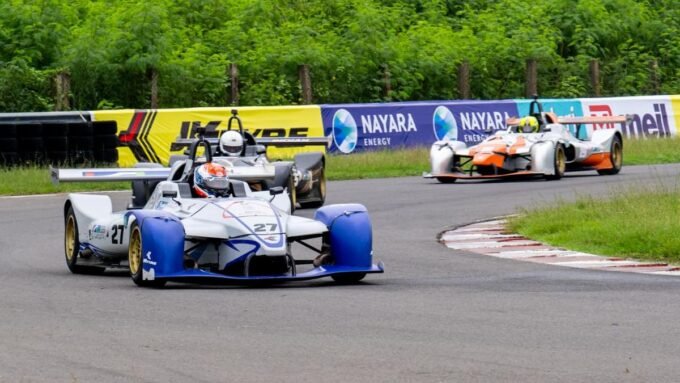
Tamil Nadu has long served as the traditional beating heart of Indian motorsport. The state currently houses two of the nation's premier permanent racing facilities: the historic Madras International Circuit in Sriperumbudur and the Kari Motor Speedway in Coimbatore. Additionally, the recent introduction of the Madras International Karting Arena marked India's first permanent karting facility constructed to strict global CIK-FIA standards. The proposed Motor Sports City seeks to build upon this foundational heritage by creating an integrated automotive sports and engineering hub.
Economic Multipliers and Automotive Manufacturing Synergy
The strategic rationale behind establishing a state-backed motorsport city extends far beyond weekend racing events. Tamil Nadu serves as one of South Asia's primary automotive manufacturing clusters, hosting extensive assembly operations for major domestic and international manufacturers including Hyundai, Renault-Nissan, BMW, Royal Enfield, and TVS Motor Company. Chief Minister Vijay emphasized that world-class racing venues provide vital testing infrastructure for specialized vehicle engineering, advanced aerodynamics, and sustainable powertrain development.
Establishing an international racing complex generates substantial economic multipliers across sports tourism, specialized manufacturing, hospitality, and engineering employment. The proposed facility will include an FIA Grade 1 certified racing circuit, a specialized drag strip, high-performance skid pans, and wind-tunnel testing facilities. By integrating dedicated youth development academies into the master plan, the state aims to scout athletic talent from across the country, providing structured coaching programs to groom future world champions.
Strategic Overview of Tamil Nadu's Motorsport Infrastructure
The development plan integrates several core motorsport disciplines into a unified master complex:
| Project Component | Facility Specification | Target FIA / FIM Sanctioning | Strategic Objective |
|---|---|---|---|
| Main Grand Prix Circuit | 4.8 – 5.2 km High-Speed Layout | FIA Grade 1 / FIM Grade A | Capable of hosting Formula 1 and MotoGP |
| Junior Feeder Circuit | 2.5 – 3.0 km National Circuit | FIA Grade 2 / Grade 3 | Hosting F4 India, 2W National Championships |
| International Karting Hub | 1.2 km Multi-Configuration Track | CIK-FIA Category A Standard | Grassroots talent scouting and karting cups |
| Automotive Tech Park | R&D Labs, Dyno Cells, Wind Tunnel | ISO Automotive Standards | Vehicle testing, EV powertrain calibration |
| Driver Training Academy | Simulators, Skid Pads, Gyms | National Sports Authority | Youth athlete conditioning and racecraft |
National Policy Shifts and the Formula 1 Ambition
The announcement arrives at a pivotal moment when the central government has demonstrated renewed political will to facilitate international motorsport events. The Buddh International Circuit in Greater Noida previously hosted three rounds of the Formula 1 Indian Grand Prix between 2011 and 2013, but the event lapsed due to bureaucratic tax disputes where local authorities classified racing as entertainment rather than sport. Recent dialogues between Union Sports Minister Mansukh Mandaviya and international promoters have focused on resolving customs duties and tax structures for global series.
Formula 1 Chief Executive Officer Stefano Domenicali recently affirmed that while a Grand Prix return requires structured promoter collaboration over a multi-year horizon, India represents a vital strategic frontier for motorsport growth. By proactively constructing an FIA Grade 1 facility backed by state legislation, Tamil Nadu positions Chennai as the premier candidate to spearhead India's international racing renaissance.
Environmental sustainability and alternative propulsion research will form central pillars of the facility's long-term technical charter. With global motorsport actively transitioning toward synthetic biofuels, high-voltage battery-electric drivetrains, and hydrogen fuel cells, the Chennai complex will feature dedicated fast-charging paddocks, green hydrogen bunkering infrastructure, and zero-emission vehicle testing zones, aligning with Tamil Nadu's broader electric vehicle manufacturing roadmap.
Engineering a Self-Sustaining Ecosystem
To ensure long-term commercial viability, the Motor Sports City is planned as a 365-day operational venue. Beyond international race weekends, the complex will host vehicle homologation testing, manufacturer track days, tyre development trials, and advanced driving safety courses. As Tamil Nadu accelerates its transition toward electric and hybrid automotive production, the facility will provide local engineers with a living laboratory to test advanced components under the most demanding dynamic conditions.
Sources
- Autocar India, "Tamil Nadu CM Vijay announces plans for new Motor Sports City", 3 September 2026, https://www.autocarindia.com/motor-sports-news/tamil-nadu-cm-vijay-announces-plans-for-new-motor-sports-city-440648
- Times of India, "Tamil Nadu government announces dedicated Motor Sports City in Chennai", 4 September 2026, https://timesofindia.indiatimes.com/sports/racing/
- FMSCI Official Portal, "FMSCI welcomes Tamil Nadu government's Motor Sports City initiative", 5 September 2026, https://www.fmsci.co.in/
Source: Autocar India: Tamil Nadu CM announces plans for new Motor Sports City