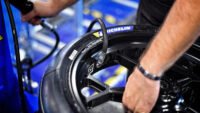
For decades, endurance sports car pit stops followed an immutable ritual: mechanics retrieved scorching-hot Michelin or Goodyear slick tires from insulated electric heating ovens (tire warmers) where rubber was pre-baked to an ideal 90°C (194°F) before being slammed onto wheel hubs.
When a driver exited the pit lane at the 24 Hours of Le Mans or the 6 Hours of Spa-Francorchamps, they possessed full, instantaneous grip into Turn 1.
All of that changed when the FIA and the Automobile Club de l'Ouest (ACO) permanently banned tire warmers across the World Endurance Championship (WEC).
Enacted to reduce paddock carbon footprints, lower freight logistics costs, and align endurance racing with road-relevant automotive sustainability, the ban forced factory Hypercars (Ferrari, Toyota, Porsche, Cadillac, BMW, and Alpine) into a terrifying new reality: launching 700-horsepower prototypes onto cold, damp asphalt on stone-cold tires.
According to engineering debriefs published by Sportscar365 WEC Hypercar Technical, the tire warmer ban has completely revolutionized out-lap driving physics, pit stop strategy, and tire compound chemistry.
Tire Warmers vs Cold Out-Lap Era: Mechanical & Strategic Matrix
| Operational Parameter | Pre-2023 WEC Era (Heated Tires via Warmers) | Modern WEC Era (Cold Tires Ban Mandate) | Strategic Endurance Consequence |
|---|---|---|---|
| Pit-Exit Tire Temperature | 85°C to 95°C (185°F to 203°F) | Ambient Track Temperature (12°C to 25°C) | Zero initial grip; driving on stone-cold rubber mimics black ice |
| Out-Lap Delta Pace | ~1.5 to 2.5 seconds slower than flying lap | 6.0 to 12.0 seconds slower on out-lap | Out-lap pace decides race wins; massive vulnerability to undercut |
| Tire Pressure Buildup | Pre-set to hot running pressure (~1.9 bar) | Installed at low cold pressure (~1.2 bar) | Sidewall squirm and rim slip until internal air pressure expands |
| Tire Rubber Glass Transition | Operates in optimal viscoelastic zone | Operates below rubber Glass Transition Temp ($T_g$) | High vulnerability to surface cold-graining and rubber tearing |
| Safety Car Restart Dynamics | Full grip available on green flag restart | Tires cool drastically behind safety car | Drivers weave violently to scrub heat; frequent Turn 1 lockups |
| Tire Double-Stinting Value | Moderate strategic advantage | Massive strategic advantage | Keeping hot, worn tires on car saves 10 seconds of out-lap loss |
The Physics of Cold Glass: Glass Transition Temperature ($T_g$)
The fundamental chemistry behind why cold racing slicks feel like hard plastic involves the polymer "Glass Transition Temperature" ($T_g$).
A high-performance racing slick is manufactured from synthetic elastomers engineered to produce maximum friction when warm.
When the tire is cold (below 40°C):
- The Rigid Glass State: The polymer chains are locked in a rigid, glassy state. The rubber cannot deform over the microscopic peaks and valleys of the asphalt, dropping the friction coefficient ($\mu$) from a sticky 1.8 down to a slick 0.6.
- Cold Graining Tears: If a driver applies heavy lateral steering angle or wide-open throttle while the rubber is in this rigid state, the tire does not grip—the surface rubber literally tears off in coarse chunks (known as cold graining), permanently destroying tire life for the remainder of the stint.
The Out-Lap Dance: How Drivers Survive the First Three Miles
Leaving the pit lane at Spa or Le Mans on cold rubber requires extraordinary restraint from a racing driver.
Arriving at the top of Raidillon or the braking zone for the Dunlop Chicane, drivers must manage extreme contradictory inputs:
- The Need to Generate Friction: The driver must work the tires aggressively to create friction heat through cyclic deflection and braking torque.
- The Danger of Immediate Crashing: Braking five meters too late causes an instant four-wheel lockup, sending a €3 million Hypercar into the barrier before completing a single lap.
Drivers utilize the hybrid all-wheel-drive system (or rear MGU-K) to drag the electric motor during acceleration, forcing electric energy into the tires to heat the carcass from the inside out while avoiding sudden steering snaps.
The Double-Stint Revolution: Strategy Inverted
The most profound sporting consequence of the ban is the elevation of tire double-stinting.
Previously, fresh rubber was almost always faster than worn rubber.
In the cold-tire era, taking fresh tires incurs a devastating 8-to-10 second out-lap penalty while the new rubber warms up.
If a team can manage their tire wear over a 60-minute fuel stint, choosing not to change tires during a pit stop allows the driver to exit on hot, already-cured rubber, flying past rivals who took new tires and are skating helplessly on cold rubber.
Through this combination of polymer chemical evolution, out-lap driver bravery, and strategic pit chess, the ban on tire warmers has achieved its ultimate goal: putting the human driver and team strategist back at the very center of world endurance racing.