Launching at 135 km/h Through the Finnish Forests
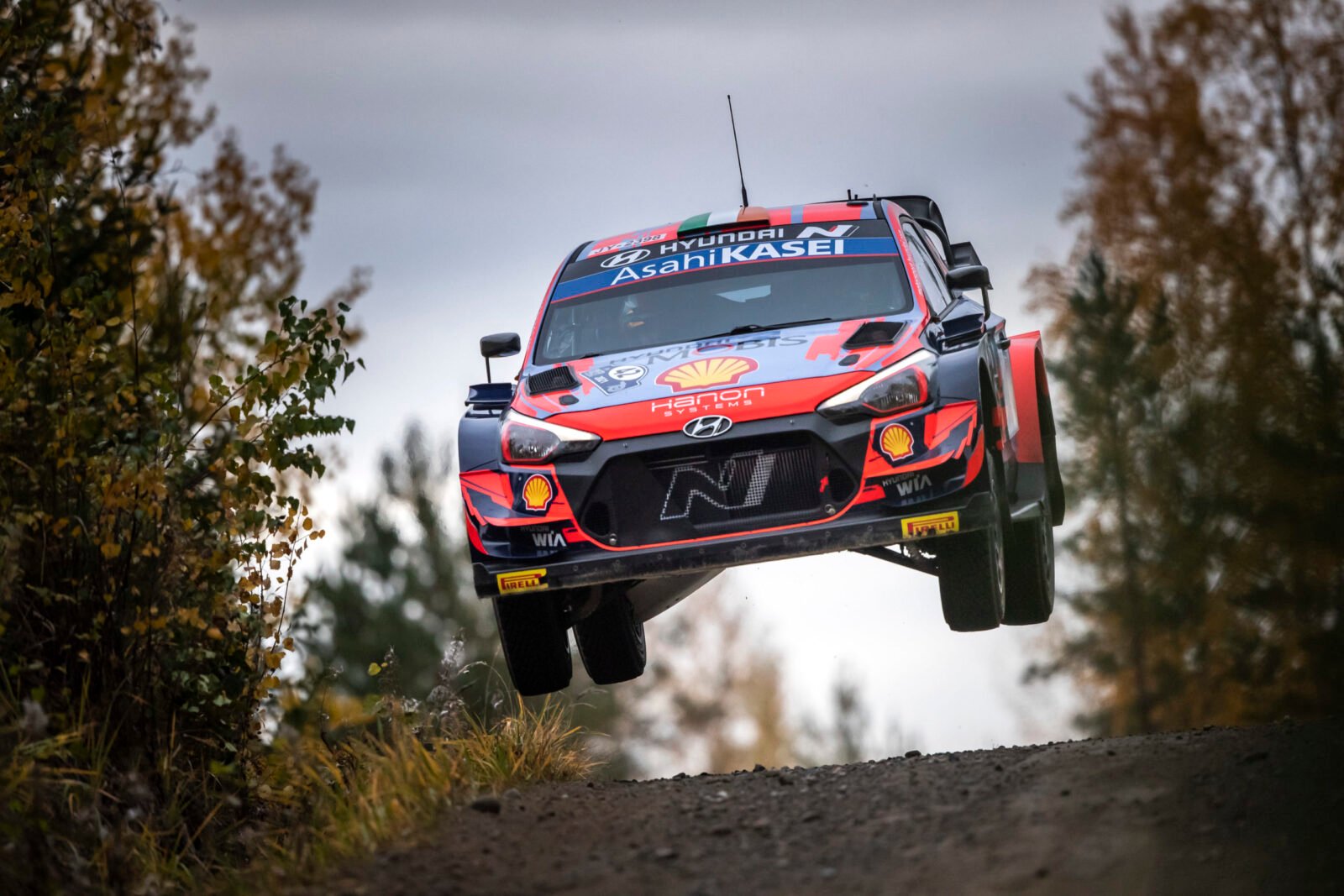
There is no sensory experience in global motorsport that compares to standing beside the tree-lined gravel corridors of Rally Finland. Known historically as the "1,000 Lakes Rally" and revered by competitors as the "Gravel Grand Prix," the event features the highest average speeds in the World Rally Championship (WRC), regularly exceeding 125 km/h across smooth, roller-coaster forest tracks. The defining physical hallmark of Rally Finland is its monumental blind crests, most notably along the legendary Ouninpohja stage, where Rally1 hybrid prototypes routinely launch more than thirty metres through the air.
Navigating a 30-metre jump at 135 km/h is not merely an exercise in driver bravery; it is a complex triumph of mechanical engineering, fluid mechanics, and aerodynamic pitch stability. In the brief two seconds that a 1,260-kilogram rally car spends completely airborne, the laws of terrestrial traction cease to apply. The manner in which the vehicle takes off, maintains level flight attitude, and absorbs the massive vertical impact upon touchdown determines whether the crew sets a stage-winning time or suffers a catastrophic off-road crash.
The Mechanics of Takeoff: Throttle Commitment and Weight Transfer
The physics of a successful jump begin dozens of metres before the car ever leaves the ground. If a driver lifts off the throttle pedal while ascending the face of a crest, vehicle weight transfers abruptly to the front axle as engine braking decelerates the wheels. This weight shift compresses the front suspension springs while extending the rear dampers. When the car crests the brow, the compressed front springs unload violently, pitching the nose downward in mid-air—a fatal dynamic known as "lawn-darting" that causes the front bumper to dig into the gravel landing face.
Conversely, professional WRC drivers maintain wide-open throttle application over crest brows. Constant engine drive torque keeps the chassis platform flat and balanced. Furthermore, the gyroscopic inertia generated by all four wheels spinning at high rotational velocity acts as a stabilizing flywheel in mid-air, resisting parasitic roll and yaw motions. By making minute steering corrections before the wheels unweight from the gravel, drivers ensure that the car's trajectory aligns precisely with the racing line upon touchdown.
Dynamics of WRC Rally1 Jump Landing & Suspension Metrics
The physical forces generated during a high-speed crest jump highlight the extreme parameters managed by rally engineers:
| Dynamic Parameter | Measured Value / Metric | Mechanical Impact | Engineering Solution |
|---|---|---|---|
| Takeoff Velocity | 130 – 142 km/h | Kinetic flight trajectory | High-speed gravel gearing calibration |
| Jump Flight Distance | 28 to 36 metres | Extended airborne duration | Aerodynamic underfloor pitch balance |
| Airborne Hang Time | 1.4 to 1.8 seconds | Total loss of steering control | Gyroscopic wheel rotation stability |
| Peak Landing Deceleration | 4.5g to 5.8g vertical force | Extreme chassis tub loading | Triple-tube welded roll cage structure |
| Suspension Damper Travel | 270 – 300 mm total stroke | Absorbing kinetic landing energy | Reiger / Bos hydraulic bump stops |
| Rebound Damping Force | Over 12,000 N resisting extension | Preventing uncontrolled secondary bounce | Dual-valve hydraulic rebound control |
| Hub Vertical Velocity | Exceeding 8.0 m/s compression | Instantaneous hydraulic fluid pressure | Nitrogen gas reservoir accumulator |
Hydraulic Bump Stops and Dual-Stage Rebound Valving
Absorbing a landing that generates vertical deceleration forces exceeding 5g requires extraordinarily sophisticated suspension hardware. Modern WRC Rally1 prototypes utilize custom long-travel MacPherson struts engineered by specialized suppliers such as Reiger Suspension and Bos Suspension. These dampers feature up to 300 millimetres of stroke and integrate hydraulic bump stops (HBS)—essentially a miniature shock absorber embedded inside the primary damper body.
During the final 40 millimetres of damper compression stroke, a secondary tapered piston enters a restricted hydraulic chamber, forcing oil through micro-orifices. This creates an exponential spike in hydraulic resistance, smoothly dissipating kinetic energy and preventing the metal chassis from slamming into the bedrock. Equally critical is high-speed rebound damping. If the damper extends too quickly after absorbing the landing impact, the stored energy in the coil springs will violently fling the car back into the air, causing an uncontrollable secondary bounce. Dual-stage rebound valving restricts oil return flow, holding the tyres firmly against the gravel to restore instantaneous steering control.
Aerodynamic Pitch Control: Wings and Flat Underfloors
Aerodynamics play an equally vital role in managing airborne flight stability. Modern Rally1 cars feature aggressive carbon-composite aerodynamic packages, including sprawling dual-element rear wings and front bumper dive planes that generate hundreds of kilograms of downforce. However, when a car becomes airborne, the angle of attack relative to the oncoming airflow changes dynamically.
If the rear wing generates excessive downforce relative to the front splitter during takeoff, the rear of the car squats while the nose pitches upward. Once airflow gets underneath the flat-bottom skid plate, aerodynamic lift can flip the car backward at 130 km/h. To prevent aerodynamic blowovers, rally aerodynamicists design the underfloor with specialized longitudinal pressure-relief tunnels that vent trapped air out through the rear diffuser. This aerodynamic equilibrium ensures that the prototype maintains a gentle nose-down pitch angle of three to five degrees throughout its flight, allowing the front skid plate to kiss the landing slope first and guide the chassis smoothly back to earth.
The Human Dimension: Pace Notes and Microsecond Timing
Behind the vehicle physics lies the indispensable human element of the co-driver. In Rally Finland, pace notes cannot simply describe the severity of a corner; they must incorporate exact distance calls and trajectory angles over every crest. A pace note such as "100 over crest, stay middle, into flat right four tightens" instructs the driver precisely where to place the car before the brow, ensuring that the 30-metre flight path lands cleanly within the track boundaries. The mastery of this aerodynamic and mechanical ballet remains an enduring demonstration of the engineering brilliance of the World Rally Championship.
Sources
- WRC Official Portal, "What does the future hold for Martins Sesks", 22 October 2026, https://www.wrc.com/en/news/what-does-the-future-hold-for-martins-sesks
- Autosport, "How WRC crews tackle jump physics at Rally Finland", 18 August 2024, https://www.autosport.com/wrc/
- DirtFish, "The engineering behind surviving Rally Finland's biggest jumps", 5 August 2024, https://dirtfish.com/rally/wrc/
Source: WRC Official: What does the future hold for Martins Sesks