In 1999, a determined group of Himalayan rally veterans led by Vijay Parmar and the Himalayan Motorsport Association (HMA) conceived a sporting trial that European rally directors deemed suicidal: a full-speed, multi-day cross-country rally raid traversing the highest motorable mountain passes on earth in the dead of autumn.
That event was the Raid de Himalaya.
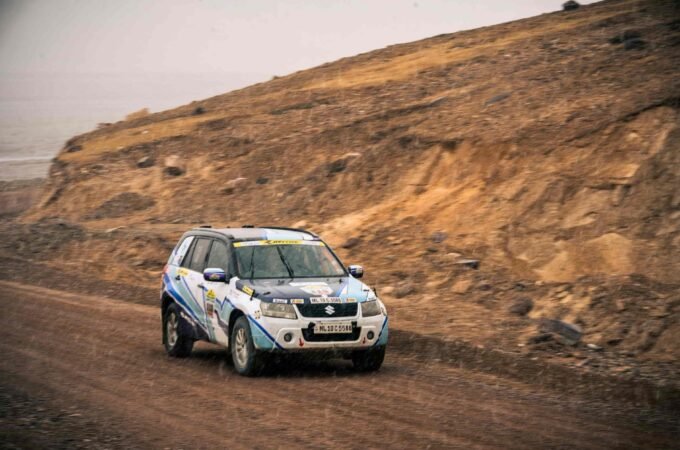
For two decades, the Raid stood alongside the Dakar Rally, the Baja 1000, and the Isle of Man TT as one of motorsport’s ultimate endurance tests. Competitors drove modified 4x4s and rode rally motorcycles over passes exceeding 5,350 meters (17,552 feet)—including Kunzum La, Baralacha La, Shingo La, and the fearsome Khardung La—battling black ice, acute mountain sickness (AMS), and blinding blizzards where daytime temperatures routinely plummeted to -15°C (5°F).
As celebrated in Red Bull India Best Rally Championships Retrospective, finishing the Raid was widely regarded as an accomplishment equal to winning conventional national rallies.
Raid de Himalaya: Extreme Operating Conditions & Attrition Matrix
| Environmental Metric | Conventional Stage Rally (INRC / WRC) | The Raid de Himalaya (Peak Altitude) | Physical & Mechanical Impact |
|---|---|---|---|
| Peak Operating Altitude | Sea Level to 1,200m (3,937 ft) | 5,359 meters (17,582 ft) over Khardung La | Atmospheric pressure drops by nearly 50%; severe driver hypoxia |
| Ambient Temperature Range | 15°C to 35°C (59°F to 95°F) | +5°C down to -18°C (41°F down to 0°F) | Freezing diesel fuel gelling; shock absorber oil cavitation |
| Total Route Distance | 300 to 500 km over 2 days | 2,000+ km over 6 grueling mountain legs | Non-stop chassis stress across boulder fields and glacial moraines |
| Historical Finishing Rate | 70% to 85% of starting field | Barely 25% to 35% of total entrants | Severe mechanical attrition; over half the field eliminated by Day 3 |
| Medical Safety Protocol | Standard ambulance response | High-altitude hyperbaric chambers & oxygen convoys | Compulsory daily blood oxygen saturation (SpO2) checks |
The Legends: Suresh Rana and the Invincible Gypsy
No discussion of the Raid de Himalaya is complete without the legend of Suresh Rana. Hailing from Manali, Himachal Pradesh, Rana won the Raid de Himalaya an unprecedented 10 times in the X-Treme 4W category, piloting a succession of heavily modified Maruti Suzuki Gypsys.
Rana’s domination demystified expensive foreign machinery. While international teams entered million-rupee prototypes with imported electronic diff-locks, Rana conquered the scree slopes of Spiti with a stripped-down 1.3-liter Gypsy:
- Mechanical Simplicity: Leaf springs that could be hammered straight in a village blacksmith shop when cracked on boulder impacts.
- Alpine Instinct: Reading black ice hidden beneath dust before tires lost adhesion on unbarricaded 1,000-meter vertical cliff drops.
In the motorcycle category, riders like CS Santosh proved their mettle in the sub-zero frost of the Raid before becoming the first Indian to conquer the sands of the Dakar Rally in South America.
The Tragedy, the Halt, and the Immortal Legacy
The very danger that forged the Raid’s legendary aura eventually forced its suspension. High-altitude rally raids in environmentally fragile, sovereign border areas faced insurmountable logistical, environmental, and safety hurdles following tragic competitor accidents in thin-air blizzards.
Yet, twenty years of the Raid fundamentally transformed Indian automotive culture. It proved that Indian engineering, privateer mechanics, and everyday production 4x4s could endure conditions harsher than any factory proving ground.
Today, every high-altitude overlanding expedition to Ladakh and Spiti travels roads whose legends were written by the roaring exhausts and flashing auxiliary lights of the Raid de Himalaya.
Source: Red Bull India Best Rally Championships Retrospective