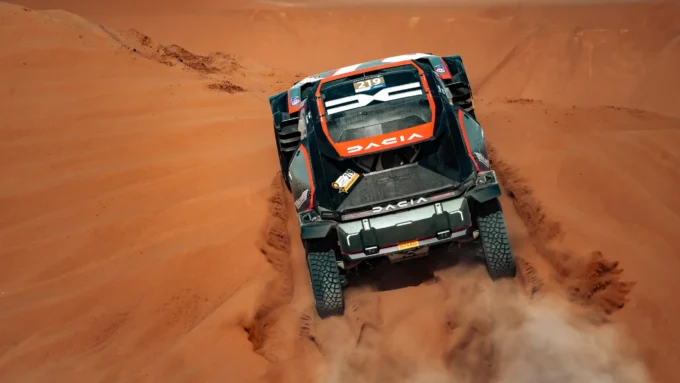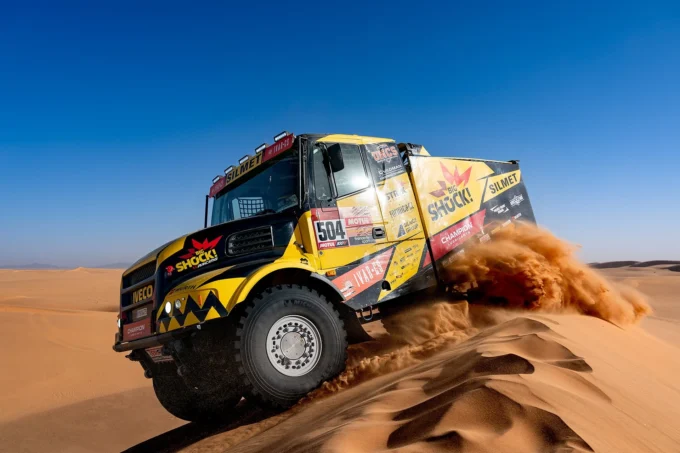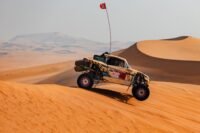
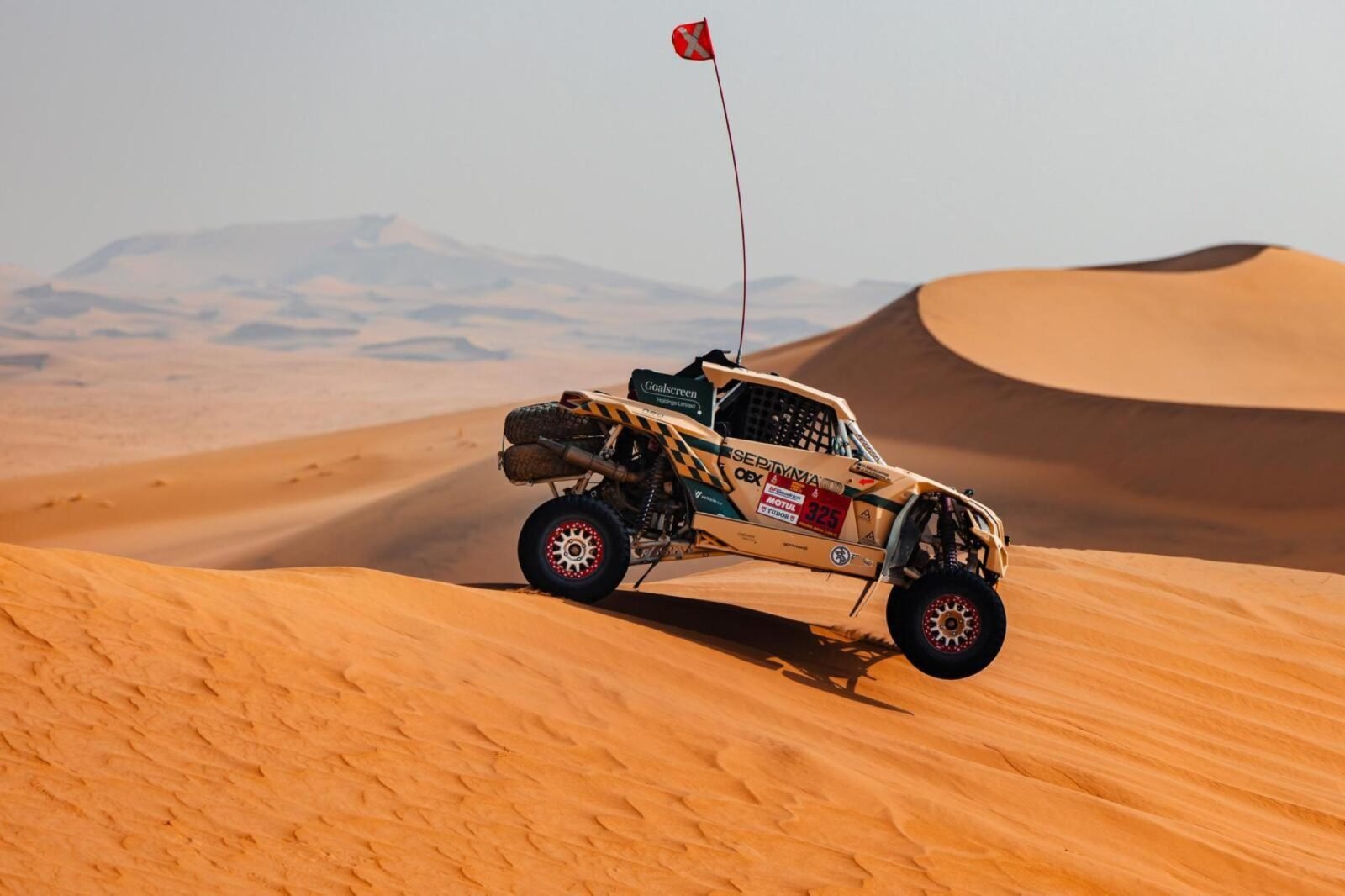
While the thundering 3.5-liter twin-turbo V6s of the premier Ultimate (T1+) class capture global headlines with their imposing presence, the most fiercely contested, mechanically agile, and cost-efficient machines tackling the Dakar Rally and the FIA World Rally-Raid Championship (W2RC) are the lightweight prototypes of the Challenger (T3) and SSV (T4) categories.
Pioneered by platforms like the Can-Am Maverick XRS Turbo RR, the Taurus T3 Max, and the Polaris RZR Pro R, these lightweight four-wheel-drive buggies weigh less than 950 kilograms, yet conquer the 300-meter dunes of the Empty Quarter, boulder-strewn canyon beds of AlUla, and 500-kilometer daily marathon stages with astonishing reliability.
According to official technical classifications published by the Dakar Rally Official Portal, the Challenger T3 and SSV T4 classes have democratized international rally raiding, serving as the proving ground where future overall champions hone their desert navigation and vehicle preservation skills.
Dakar Challenger (T3) vs SSV (T4): Technical Benchmark Matrix
| Component Subsystem | Production Side-by-Side (UTV) Baseline | FIA Challenger (T3) Prototype (Taurus / Can-Am) | Dakar Endurance Operational Function |
|---|---|---|---|
| Engine Architecture | 900cc to 1,000cc Turbocharged 3-Cylinder | 1,000cc Turbo / FIA 25mm Air Restrictor (~175 BHP) | Delivers instantaneous low-RPM boost for soft dune cresting |
| Transmission Hardware | Standard rubber belt Continuously Variable (CVT) | Sadev 6-Speed Sequential / Heavy-Duty Racing CVT | Eliminates belt-shredding heat soak during sustained dune climbs |
| Minimum Vehicle Weight | ~750 kg to 820 kg curb weight | 900 kg (Challenger T3) / 950 kg (SSV T4) Minimum Dry | Low ground pressure floats effortlessly across soft powdery sand |
| Suspension Architecture | Dual A-arms front / trailing arm rear (350mm travel) | Billet Chromoly Arms / 400mm Travel Dual Reiger/Fox Shocks | Absorbs 120 km/h rock impacts without bending pivot points |
| Tire & Wheel Hardware | 30-inch commercial off-road tires / alloy rims | 32-inch BFGoodrich Baja T/A KR2 / Forged Beadlocks | Clamps tire bead at 8 PSI; prevents de-beading in rock ruts |
| Fuel Cell Range | 40-liter plastic stock fuel tank | 130-liter FIA FT3-certified Kevlar Fuel Bladder | Provides 300+ km full-throttle desert range through dunes |
The CVT Belt Nightmare: Managing 120°C Transmission Heat
In the SSV (T4) category, vehicles utilize Continuously Variable Transmissions (CVTs) operating via a high-tensile rubber and Kevlar drive belt running between two variable-diameter pulleys.
In civilian trail riding, CVTs are virtually indestructible. In the Dakar dunes, however, they operate in extreme thermal conditions:
- The Sand Resistance Drag: Churning through soft dunes forces the engine to run at 8,000 RPM continuously while vehicle forward speed drops to 30 km/h.
- Frictional Heat Soak: The friction between the belt and aluminum clutches generates temperatures exceeding 130°C (266°F).
- Catastrophic Delamination: When rubber reaches 140°C, the adhesive bonds fail, violently exploding the belt into thousands of Kevlar threads that wrap around the clutch shaft, forcing the crew to halt and spend 20 agonizing minutes extracting molten rubber under scorching desert heat.
Leading teams like South Racing Can-Am and Red Bull Off-Road Junior Team combat this via forced-air intake blowers, carbon-fiber clutch ducting, and real-time infrared temperature sensors on the dashboard that alert drivers to ease off the throttle before the belt delaminates.
Lightweight Agility: Why T3 Buggies Out-Climb Heavy Trucks
On soft, shifting dunes, physics heavily favors light mass. A 2,010 kg T1+ truck exerts over 2.0 kg/cm² of ground pressure, requiring high momentum to avoid sinking.
A 900 kg Challenger T3 prototype—fitted with wide 32-inch tires deflated to 8 PSI—exerts a ground pressure under 0.65 kg/cm².
Like a desert insect walking across powder, the lightweight buggy skates across the surface of the dunes without trenching.
When a heavy truck gets stuck on a razorback crest, a T3 buggy can simply dance around the stranded vehicle, picking tight, technical lines between camel grass clumps that larger vehicles cannot fit through.
The Feeder Pipeline to Factory Cockpits
The greatest value of the T3 and T4 categories is talent development.
Drivers like Seth Quintero, Cristina Gutiérrez, Mitch Guthrie Jr., and Austin Jones cut their teeth in the lightweight classes, learning desert roadbook navigation, mechanical preservation, and physical stamina before being promoted to factory T1+ seats at Toyota, Ford, and Dacia.
By offering 85% of the performance of a multi-million-dollar factory prototype at 20% of the operational cost, the Challenger and SSV classes remain the beating heart of the Dakar Rally’s vibrant competitive spirit.
Sources
- Dakar Rally, "Dakar Rally Challenger (T3) and SSV (T4) Regulations and General Classification", 2026, https://www.dakar.com/
- FIA, "FIA World Rally-Raid Championship (W2RC) Technical Regulations for Lightweight Prototypes", 2025, https://www.fia.com/
- Red Bull Motorsports, "How Lightweight Buggies Dominate the World's Toughest Dunes at Dakar", January 2024, https://www.redbull.com/int-en/events/dakar-rally-2024