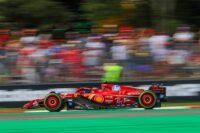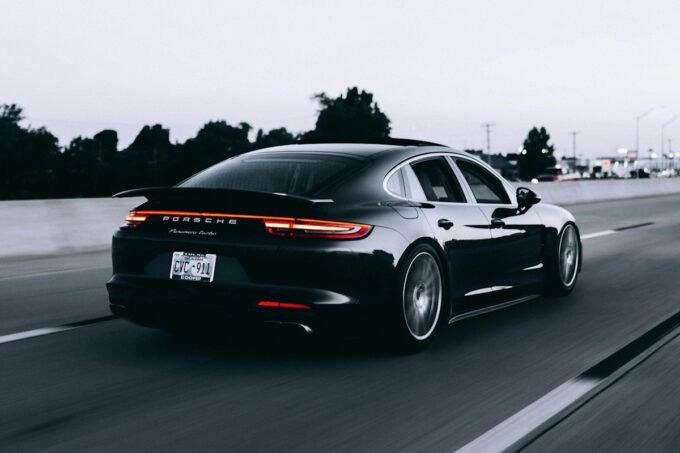
In the historic era of sports car racing, Balance of Performance (BoP) was an imprecise, highly contentious game of regulatory cat-and-mouse. Factory teams routinely "sandbagged"—deliberately masking their true lap time potential during practice and qualifying to fool governing bodies into granting favorable minimum weight breaks or larger air restrictor diameters for the 24 Hours of Le Mans or the Rolex 24 at Daytona.
Today, in the unified golden era of IMSA GTP and FIA WEC Hypercar racing, deliberate deception is mathematically impossible.
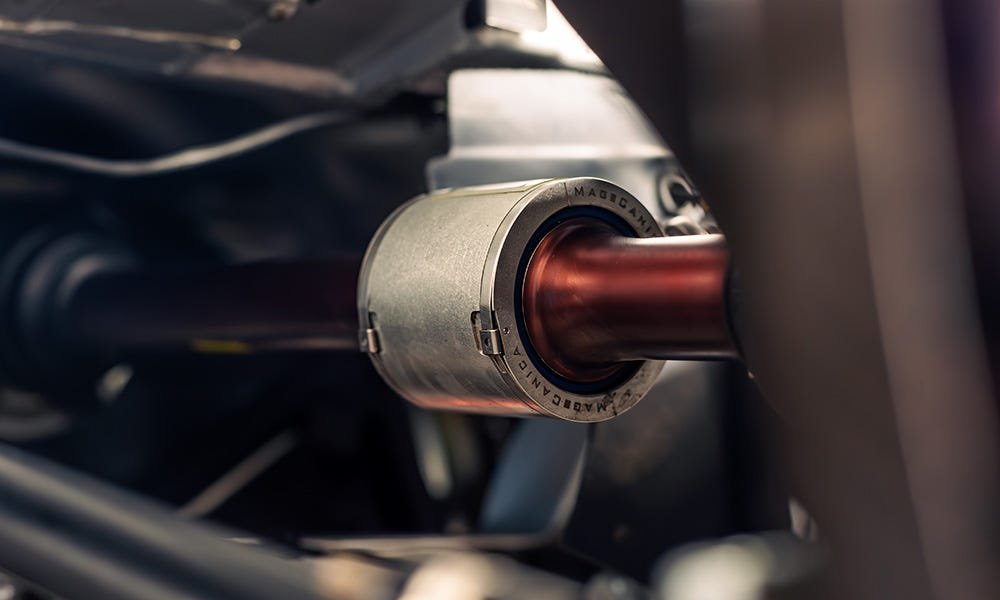
Governing bodies enforce engine power curves not by measuring engine displacement or bench dynamometer figures, but by mandating real-time rotating optical torque meters integrated directly onto the rear driveshafts of every competing Porsche 963, Cadillac V-Series.R, Ferrari 499P, Toyota GR010, and BMW M Hybrid V8.
According to technical regulations published by IMSA Official Technical Regulations, these driveshaft sensors measure the exact mechanical horsepower delivered to the rear wheels at millisecond intervals, feeding live encrypted telemetry directly to race control scrutineering servers.
Modern Hypercar BoP Control Architecture: Technical Matrix
| Technical Control Metric | FIA WEC Hypercar Regulation | IMSA GTP Regulation | Engineering Mechanism |
|---|---|---|---|
| Max Wheel Power (Power Cap) | 500 kW to 520 kW (~670 to 700 hp) | 500 kW to 520 kW (~670 to 700 hp) | Strictly enforced via driveshaft torque strain gauges |
| Two-Stage Power Gain (Above 250 km/h) | Active power delta (±1.5% to 3.0%) | Single flat power ceiling | Modulates straight-line acceleration to balance aerodynamic efficiency |
| Maximum Stint Energy Limit | Stint Energy Allocations (e.g., 900 to 920 MJ) | Equivalent Virtual Energy Tank (~910 MJ) | Integrates torque × RPM over time; cuts power if limit is reached |
| Torque Sensor Hardware | Mandated spec optical strain-gauge meters | Identical homologated spec units | Calibrated to ±0.2% measurement accuracy; tamper-proof telemetry |
| Minimum Vehicle Base Weight | 1,030 kg to 1,085 kg (Varies per BoP table) | 1,030 kg to 1,060 kg | Ballast placed in standardized chassis floor compartments |
| Front MGU Hybrid Deployment Speed | 190 km/h (118 mph) in dry / wet (LMH cars) | Rear-axle spec hybrid only (LMDh cars) | Prevents all-wheel-drive traction advantage out of slow hairpins |
How the Rotating Driveshaft Torque Sensor Operates
Mounted directly on the left and right rear driveshafts between the transaxle differential and wheel hubs, each sensor uses specialized strain-gauge bridges:
- Torsional Deflection Measurement: As the engine and hybrid motor apply torque, the driveshaft experiences minute elastic twisting. The strain gauge detects this microscopic deflection.
- Wireless Induction Telemetry: Data is transmitted wirelessly via high-frequency radio frequency induction coils to a chassis receiver at a frequency of 1,000 Hz (1,000 measurements per second).
- Instantaneous Power Calculation: The central FIA/IMSA datalogger computes real-time power by multiplying measured torque by driveshaft angular velocity.
If a power spike exceeds the allocated BoP power curve by more than a specified margin (often as little as 2 kW for more than 50 milliseconds), the car automatically triggers an instantaneous electronic power trim via the Bosch engine control unit (ECU) or incurs a drive-through penalty for power overshoot.
The Virtual Energy Tank: Redefining Pit Strategy
Beyond peak power, torque sensors govern the "Virtual Energy Tank." Instead of measuring the volume of physical biofuel pumped into the fuel cell, race control tracks total megajoules (MJ) consumed per stint—combining both internal combustion fuel burn and hybrid battery electrical discharge.
Once a prototype expends its allocated megajoules (e.g., 910 MJ), the powertrain enters an ultra-lean limp mode, forcing the driver to pit immediately regardless of how many liters of physical gasoline remain in the tank.
This technical synchronization ensures that whether a manufacturer builds a high-revving naturally aspirated 5.5-liter V8 (Cadillac) or a twin-turbo 2.6-liter V6 (Peugeot), victory is decided purely by tire management, pit crew execution, and traffic navigation across multi-class endurance marathons.