The Golden Era of Global Prototype Convergence
Top-class endurance sports car racing is currently enjoying an unprecedented global renaissance. The convergence agreement orchestrated between the Automobile Club de l'Ouest (ACO), the Fédération Internationale de l'Automobile (FIA), and the International Motor Sports Association (IMSA) created a unified top category: Hypercar in the World Endurance Championship (WEC) and GTP in the IMSA WeatherTech SportsCar Championship. For the first time in modern racing history, manufacturers can build a single prototype capable of competing for overall victory at both the 24 Hours of Le Mans and the Rolex 24 at Daytona.
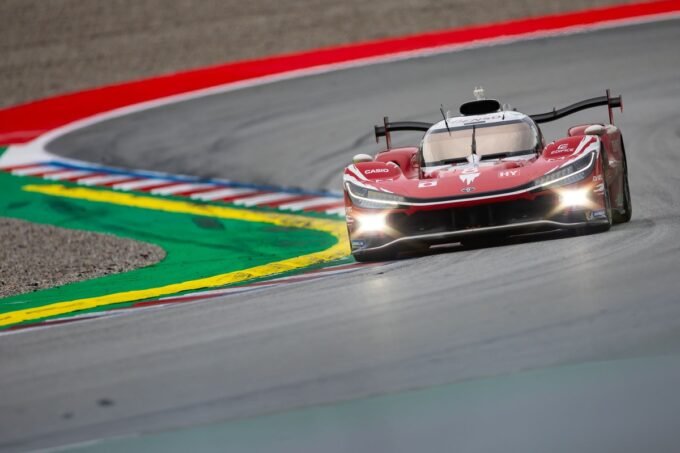
However, beneath this regulatory harmony lies a fundamental engineering dichotomy. The regulations offer manufacturers two distinct architectural pathways to the grid: Le Mans Hypercar (LMH), which permits total bespoke engineering freedom including custom hybrid all-wheel-drive powertrains, and Le Mans Daytona h (LMDh), which mandates a cost-controlled chassis spine paired with a standardized, spec rear-axle hybrid system. This divergence has triggered an intense technological tug-of-war between bespoke freedom and standardized efficiency.
The LMDh Formula: Bosch, Xtrac, and Williams Advanced Engineering
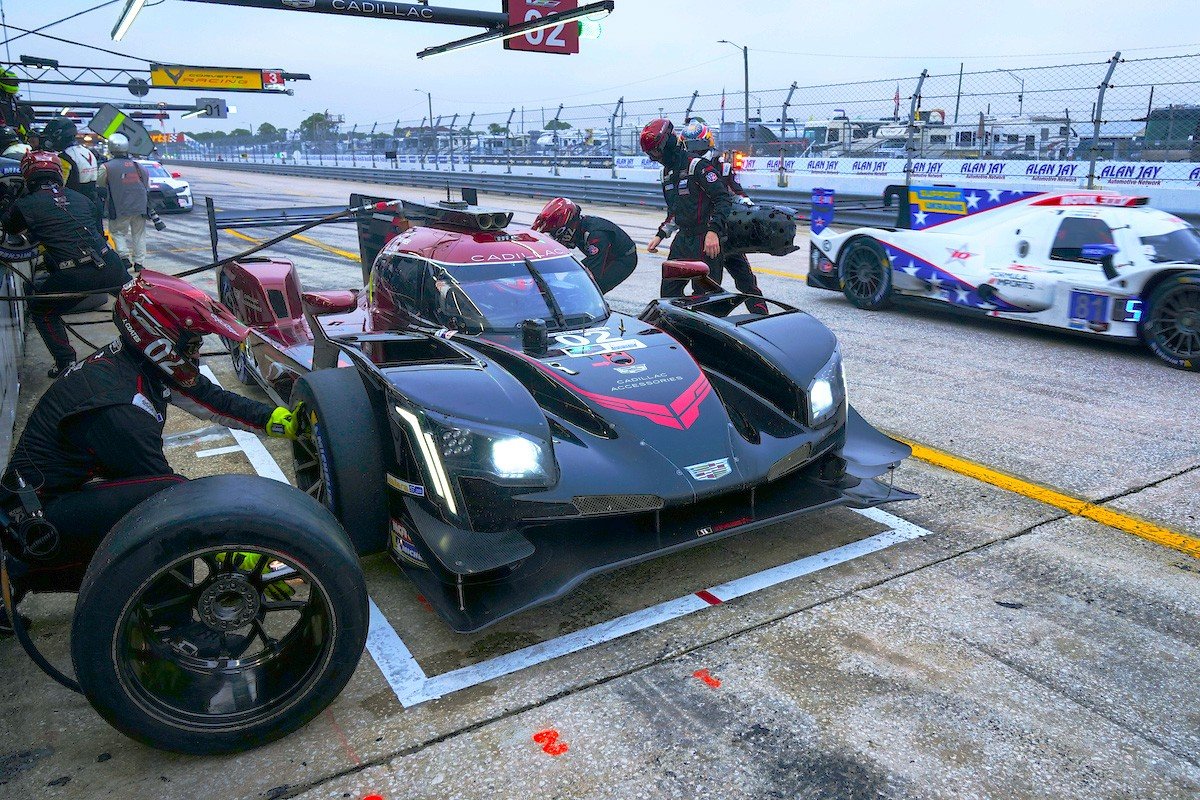
The LMDh formula—embraced by giants such as Porsche, Cadillac, Acura, BMW, and Alpine—prioritizes cost efficiency and mechanical simplicity. Manufacturers choose one of four approved LMP2 chassis spines supplied by Dallara, Multimatic, Oreca, or Ligier. While manufacturers design their own branded styling bodywork and develop their own bespoke internal combustion engine, the hybrid powertrain is strictly standardized.
The spec hybrid system comprises three critical components: a 50 kW (67 hp) permanent magnet synchronous Motor Generator Unit (MGU) developed by Bosch, a 7-speed transverse sequential gearbox provided by Xtrac (internal designation P1359), and a lightweight 1.35 kWh lithium-ion battery pack engineered by Williams Advanced Engineering (WAE). The electric motor is integrated directly into the transmission bellhousing, driving exclusively through the rear wheels. Under braking, the MGU recovers kinetic energy, which is subsequently deployed during acceleration in bursts controlled precisely by central FIA/IMSA software.
Architectural Comparison: LMDh Spec Hybrid vs LMH Bespoke Hybrid
The core technical parameters highlight the fundamental engineering divergence between the two formulas:
| Technical Feature | LMDh Architecture (e.g. Porsche 963) | LMH Architecture (e.g. Ferrari 499P) | Strategic Impact |
|---|---|---|---|
| Chassis Spine Sourcing | Spec Constructor (Dallara, Oreca, Multimatic, Ligier) | 100% Bespoke In-House Monocoque | High cost control vs total aerodynamic packaging freedom |
| Hybrid Electric Axle | Rear-Axle Integration (Inside Gearbox Bellhousing) | Front-Axle Integration (Independent Differential) | Rear-wheel drive only vs on-demand all-wheel drive |
| Hybrid Power Output | 30 to 50 kW (Spec Bosch Unit) | Up to 200 kW Electric Drive (Bespoke) | Controlled power deployment vs high regenerative recovery |
| Electric Activation Speed | 0 km/h (Available instantly on acceleration) | 190 km/h Minimum Dry Threshold | LMDh accelerates harder out of hairpins; LMH rules sweeps |
| Battery Technology | Spec 1.35 kWh Pack (Williams Advanced Engineering) | Bespoke High-Rate Energy Storage (In-House) | Fixed weight distribution vs optimized packaging balance |
| Powertrain Total Cap | 500 to 520 kW Combined Ceiling | 500 to 520 kW Combined Ceiling | Balanced via torque sensors and virtual energy tank |
Balancing Traction and Dynamics: The 190 km/h Deployment Rule
The primary technical battleground between LMH and LMDh centers on front-axle traction versus low-speed agility. Because bespoke LMH prototypes like the Ferrari 499P and Toyota GR010 utilize an electric motor mounted on the front axle, they effectively function as all-wheel-drive prototypes when hybrid power is deployed. Front-wheel electric traction delivers exceptional tyre wear characteristics, balanced braking stability, and superior traction through medium- and high-speed corners.
To prevent LMH prototypes from dominating rear-wheel-drive LMDh machines out of low-speed hairpins, regulators introduced a strict front-axle hybrid deployment threshold. In dry conditions, LMH prototypes cannot engage front-axle electric power below 190 km/h. Below this speed, an LMH car is purely rear-wheel drive, powered exclusively by its internal combustion engine. This rule allows LMDh cars—which can deploy their rear 50 kW electric boost at any speed—to punch off slow corners with matching acceleration, preserving parity across diverse circuit layouts.
The Balance of Performance and Torque Sensor Telemetry
Equalizing these two distinct philosophies across a 24-hour race distance requires extraordinary technical governance. Both WEC and IMSA mandate driveshaft torque sensors on every car, measuring real-time mechanical power output to within 0.5% accuracy. Regulators adjust maximum power ceilings, minimum vehicle weights, and total stint energy allocations (the "Virtual Energy Tank") through dynamic Balance of Performance (BoP) algorithms.
When an LMDh car deploys its 50 kW electric boost, the engine control unit instantly throttles back the combustion engine so that total combined power never exceeds the mandated power curve. This technological synchronization has proven remarkably successful. LMDh prototypes have captured overall victories at Daytona, Sebring, and Indianapolis, while pushing bespoke LMH machinery to the absolute limit at Le Mans. The convergence represents a triumph of modern engineering governance, proving that diverse technical architectures can coexist in world-class motorsport.
Sources
- Sportscar365, "Inside the Porsche 963: Technical Details Revealed", 26 January 2023, https://sportscar365.com/lemans/wec/inside-the-porsche-963-technical-details-revealed/
- RACER, "Penske, Porsche to reunite for LMDh program", 4 May 2021, https://racer.com/2021/05/04/penske-porsche-to-reunite-for-lmdh-program
- FIA World Endurance Championship Official Portal, "Hypercar Technical Regulations Overview", 10 February 2024, https://www.fiawec.com/
Source: Sportscar365: Inside the Porsche 963 Technical Details