High-Speed Street Warfare Along the Caspian Sea
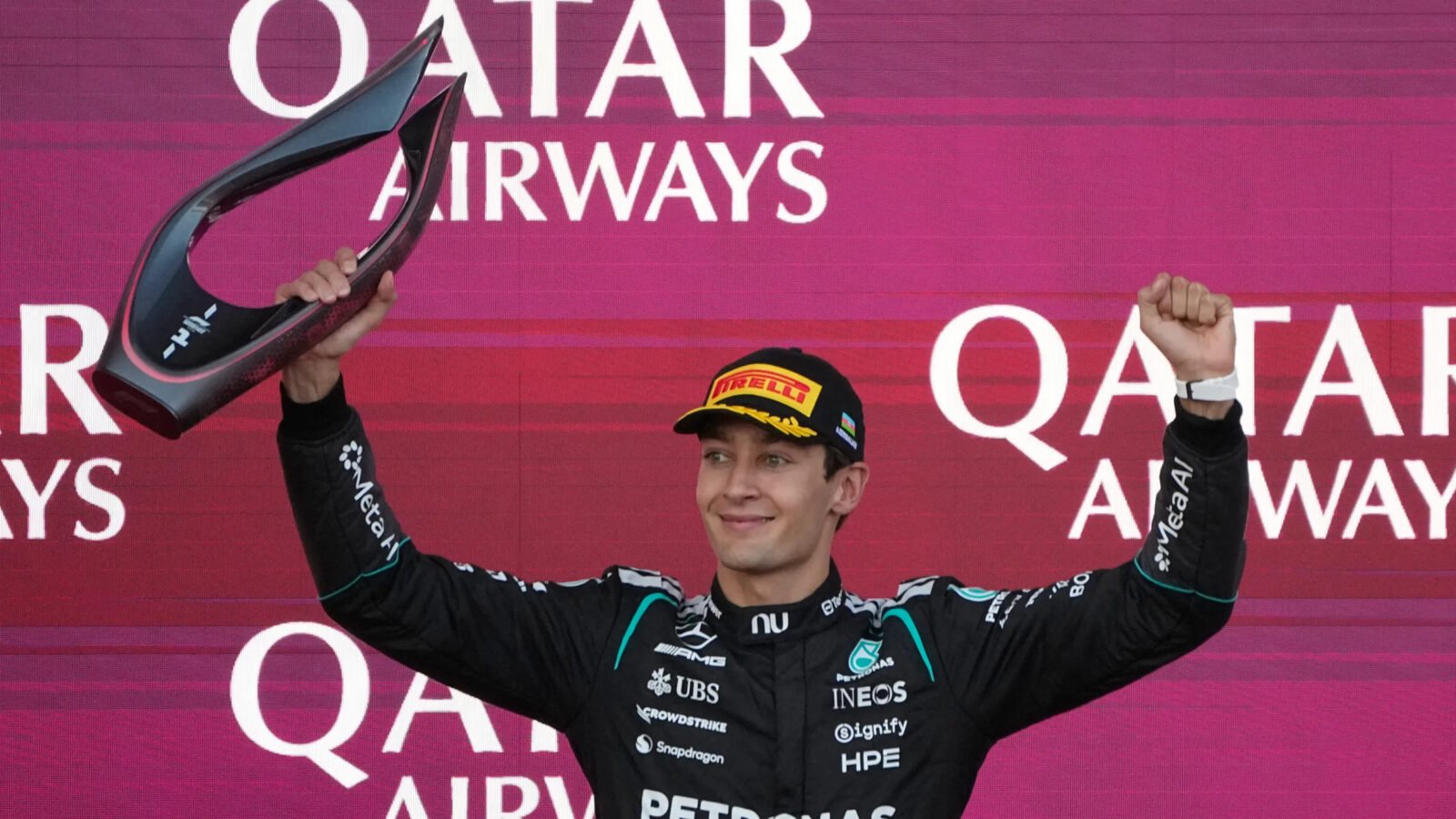
The Baku City Circuit has earned an undisputed reputation as the most chaotic and unpredictable street track in the Formula 1 World Championship. Featuring an extreme architectural contrast—threading through the ultra-narrow 7.6-metre bottleneck around the historic Old City castle before opening into a blistering 2.2-kilometre full-throttle blast along Neftchilar Avenue—the Azerbaijan Grand Prix provides an uncompromising test of aerodynamic compromise. In September 2026, the streets of Baku witnessed an all-time classic as Mercedes driver George Russell held off a furious late-race charge from Max Verstappen to win by a mere 0.196 seconds.
Russell's triumph marked his third victory of the 2026 season and his first since June's Austrian Grand Prix, consolidating Mercedes' lead at the summit of the Constructors' World Championship. Starting from the second row, Russell survived two disruptive Safety Car periods, multiple barrier collisions by midfield contenders, and relentless aerodynamic pressure from Red Bull Racing to claim one of the most hard-fought victories of his Grand Prix career.
The 2.2-Kilometre Slipstream Duel: Russell vs Verstappen
The definitive tactical showdown ignited following the second Safety Car restart on lap forty-two. Red Bull had split their strategies, fitting Max Verstappen with fresh soft-compound tyres for a ten-lap sprint to the chequered flag, while Russell remained on scrubbed hard tyres. Capitalizing on superior tyre warm-up, Verstappen quickly cleared Ferrari's Charles Leclerc and set off in pursuit of the leading Mercedes, erasing a 2.8-second deficit in three laps.
What followed was a masterclass in defensive positioning and hybrid energy deployment. With DRS enabled along the Caspian seafront, Verstappen reached speeds exceeding 344 km/h, pulling alongside Russell on successive laps into Turn 1. However, Russell deployed his Mercedes ERS battery reserves tactically, draining electrical boost out of the final chicane to establish a three-car-length buffer before the braking zone. On the final lap, Verstappen mounted a desperate lunge down the inside of Turn 1, locking his front-left tyre. Russell held the wider racing line, cutting back underneath to accelerate across the start-finish line just 0.196 seconds ahead.
2026 Formula 1 Azerbaijan Grand Prix Final Race Classification
The official classification from Baku demonstrates the intense margins of the street battle:
| Finish Position | Driver Name | Constructor Team | Grid Start | Total Race Time / Gap | Championship Points |
|---|---|---|---|---|---|
| 1 | George Russell | Mercedes-AMG F1 | P3 | 01:34:05.120 (Winner) | 25 Points |
| 2 | Max Verstappen | Red Bull Racing | P2 | +00.196 s | 18 Points |
| 3 | Isack Hadjar | Red Bull Racing | P6 | +07.410 s | 15 Points |
| 4 | Charles Leclerc | Scuderia Ferrari | P1 (Pole) | +12.350 s | 12 Points |
| 5 | Lando Norris | McLaren F1 Team | P4 | +18.910 s | 10 Points |
| 6 | Lewis Hamilton | Scuderia Ferrari | P5 | +24.620 s | 8 Points |
| 7 | Oscar Piastri | McLaren F1 Team | P8 | +31.840 s | 6 Points |
| 8 | Kimi Antonelli | Mercedes-AMG F1 | P7 | +38.510 s | 4 Points |
Technical Analysis: Low-Downforce Wings and Brake Thermal Limits
Succeeding in Baku requires solving a brutal aerodynamic paradox. If an engineering team runs excessive downforce to navigate the twisting turns around the Old City in Sector 2, the car becomes a sitting duck along the 2.2-kilometre straight. Mercedes ran an extreme spoon-profile low-downforce rear wing with trimmed endplate louvers, reducing aerodynamic drag by seven percent compared to their Monza configuration.
Equally critical was brake temperature management. Approaching Turn 1 after two kilometres of full throttle, carbon brake discs cool dramatically to below 300°C. When drivers stomp on the brake pedal under 5.2g of deceleration, the sudden thermal shock can cause disc glazing or catastrophic lockups. Russell modulated his brake bias migration dynamically throughout the final stint, shifting brake balance slightly rearward to prevent front-axle lockups while managing tyre carcass temperatures along the bumpy street surface.
Hadjar's Comeback and Championship Implications
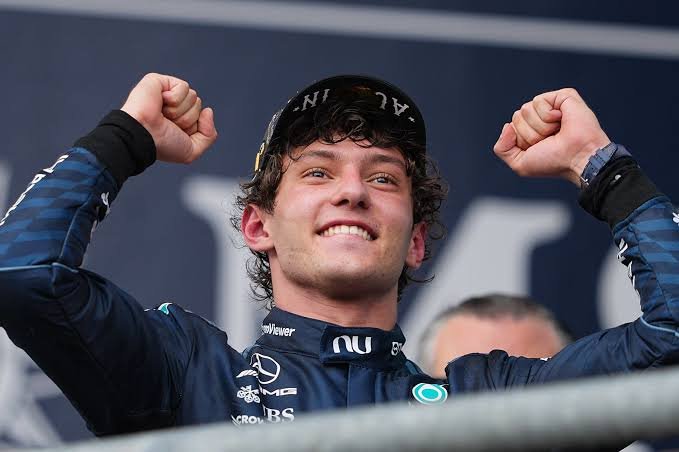
Adding to the drama of the Baku podium was a heroic performance by Red Bull junior Isack Hadjar. After spending six weeks sidelined with a fractured wrist sustained in a mid-season testing crash, Hadjar produced a mature drive from sixth on the grid to finish third, securing a vital double podium for Red Bull Racing and proving his physical readiness for premier-class competition.
Russell's victory revitalizes his position in the drivers' championship, bringing him within touching distance of teammate Kimi Antonelli and Ferrari's Charles Leclerc. For Mercedes-AMG F1, executing a defensive street-circuit victory against Verstappen under intense aerodynamic pressure proves that their 2026 low-drag package possesses the outright straight-line speed and tactical durability required to secure both world titles.
Sources
- Autocar India, "2026 F1: Russell fends off Verstappen to win Azerbaijan GP", 27 September 2026, https://www.autocarindia.com/motor-sports-news/2026-f1-russell-fends-off-verstappen-to-win-azerbaijan-gp-440857
- Formula 1 Official Portal, "Azerbaijan Grand Prix 2026 Race Results and Telemetry Breakdown", 27 September 2026, https://www.formula1.com/
- Autosport, "Russell holds off charging Verstappen in Baku thriller", 28 September 2026, https://www.autosport.com/f1/
Source: Autocar India: Russell fends off Verstappen to win Azerbaijan GP