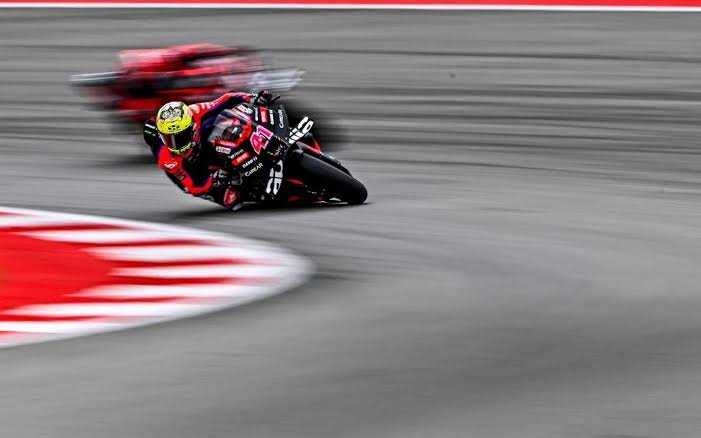
Over the past five seasons, MotoGP aerodynamics has undergone a startling evolutionary mutation.
Where grand prix motorcycles once featured sleek, tear-drop silhouettes designed purely for maximum straight-line top speed, modern premier-class prototypes from Ducati, Aprilia, KTM, and Honda now resemble miniature aerospace fighter jets, adorned with bulbous lower fairings, stepped diffusers, and bulging downwash ducts.
These aerodynamic innovations are known in paddock technical circles as "Ground Effect Fairings."
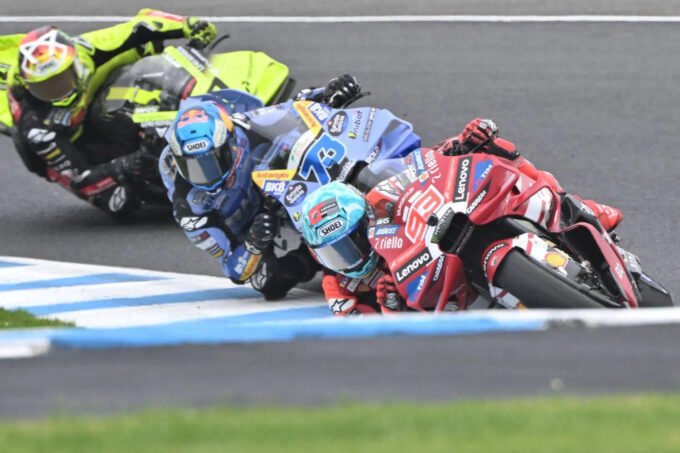
Unlike traditional front aerodynamic winglets that lose their downforce vector the moment the motorcycle leans over, ground effect sidepod fairings are designed to produce aerodynamic grip specifically when the motorcycle is leaned over at extreme 60-degree angles while carving through sweeping high-speed corners like Arrabiata at Mugello or the fast sweepers at Phillip Island.
According to technical analysis published in the MotoGP Official Technical Archive, ground effect aerodynamics has fundamentally altered corner-speed limits, front-tire thermal windows, and riding biomechanics across the MotoGP grid.
MotoGP Aerodynamics Evolution: Front Wings vs Ground Effect Fairings
| Aerodynamic Component | Traditional Front Aero Winglets | Ground Effect Lower Sidepod Fairings | Dynamic Operational Benefit |
|---|---|---|---|
| Primary Physical Mechanism | Symmetric downforce perpendicular to chassis | Venturi ground effect suction between fairing and asphalt | Suction pressure increases as motorcycle leans closer to track |
| Operational Lean Window | Effective primarily from 0° to 35° lean | Effective primarily from 45° to 65° extreme lean | Produces lateral and vertical grip precisely at maximum apex lean |
| Downforce Vector Direction | Pushes downward into the bike's vertical axis | Pulls bike diagonally down toward the road surface | Sucks the tires into the tarmac, eliminating front-end washouts |
| High-Speed Cornering Speed | Neutral; adds minor drag through fast sweepers | Increases mid-corner apex speeds by 4 to 8 km/h | Unlocks unprecedented cornering speeds through fast kinks |
| Front Tire Thermal Load | High straight-line tire carcass compression | Concentrated lateral shoulder tire heating | Accelerates front Michelin tire wear; requires harder compounds |
| Rider Physical Effort | Standard physical effort | High physical effort; counter-steering resistance | Riders must physically muscle bike against aerodynamic suction |
The Physics of the Lean: Venturi Suction at 30 Millimeters
The underlying fluid dynamics of a ground effect fairing rely on Bernoulli’s principle and venturi tunnel acceleration.
When a MotoGP machine leans over at 60 degrees, the bulging lower belly fairing drops to within just 25 to 35 millimeters of the asphalt surface.
Aprilia and Ducati aerodynamicists sculpt the outer fairing profile with a stepped, inverted-wing contour:
- Airflow Constriction: As air rushes between the low-hanging fairing edge and the track surface at 180 km/h, the narrow gap constricts the incoming airflow.
- Velocity Acceleration: The air accelerates rapidly through this microscopic venturi channel, causing local static air pressure to plummet.
- The Ground Effect Suction: This massive low-pressure zone beneath the motorcycle acts like an aerodynamic suction cup, creating a diagonal downforce vector that physically sucks the motorcycle’s chassis toward the asphalt.
Eliminating the Dreaded Front-End Washout
In the pre-ground-effect era, when a rider carried excessive speed into a fast 4th-gear sweeper, the front Michelin tire would exceed its mechanical friction limit, tucking the steering handlebar inward and causing a catastrophic lowside crash.
With ground-effect downforce generating upwards of 25 kilograms of suction load directly through the chassis floor at apex lean, the front and rear tires are mechanically compressed into the microscopic crevices of the asphalt.
Riders can trail-brake deeper toward the apex with knee, elbow, and shoulder sliding across the kerbs, confident that aerodynamic suction will prevent the front tire from washing out.
The Downside: Physical Muscle and Tire Temperature Traps
Ground-effect downforce has completely transformed rider fitness requirements.
Because the aerodynamic suction continuously pulls the motorcycle toward the track, transitioning the bike through high-speed chicane flicks (like the Casanova-Savelli section at Mugello) requires superhuman physical effort.
Riders must physically wrench the handlebars to break the suction seal before throwing 157 kilograms of motorcycle over to the opposite side.
Furthermore, this continuous downward suction generates intense friction heat on the very edge of the front tire shoulder, pushing core tire temperatures past 125°C and forcing Michelin to develop ultra-hard tire compounds to withstand the aerodynamic punishment.
Despite these physical challenges, ground-effect sidepods have rewritten the laws of high-speed two-wheel cornering, proving that aerospace aerodynamics can tame two-wheel prototype racing at the absolute limits of human daring.