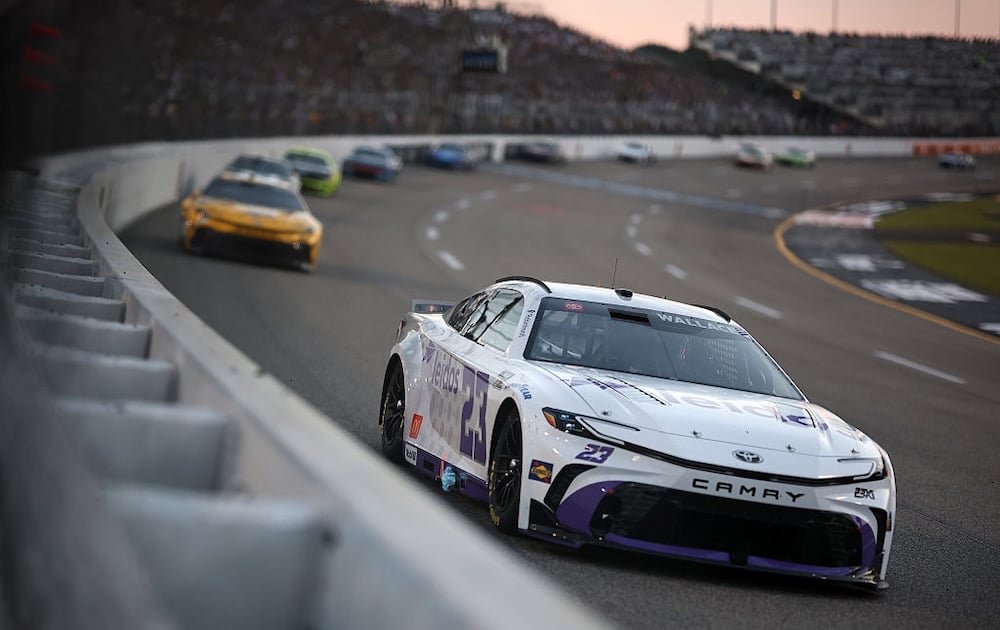
When Michael Jordan and Denny Hamlin’s 23XI Racing joined Front Row Motorsports in filing a federal antitrust lawsuit against NASCAR in the Western District of North Carolina, American stock car racing faced its most consequential commercial reckoning since the inception of the charter system in 2016.
At the core of the dispute was a fundamental question of sporting ownership: are NASCAR Cup Series teams independent franchise owners entitled to permanent governance and guaranteed enterprise valuation, or are they mere independent contractors subject to the unilateral terms of the France family?
Following historic agreements documented by NASCAR Official Statement on Team Charters, the resolution established a modernized economic baseline that redefined team valuations across modern American motorsport.
The Charter Economics: Evolution of Value & Revenue Distribution
| Commercial Pillar | Pre-2025 Charter Agreement | 2026+ Modernized Agreement | Strategic Economic Impact |
|---|---|---|---|
| Media Rights Share | ~25% of media revenue pool to teams | Expanded to ~40% (approx. $1.1B annually) | Substantially narrows team dependence on outside sponsorship |
| Charter Permanence | Renewable 7-year term (Expiring 2024/2031) | Extended rolling terms with evergreen protections | Gives private equity & institutional investors collateral stability |
| Secondary Market Value | $12M – $18M per charter (2020) | $40M – $55M per charter (2026 Valuation) | Comparable to MLS franchises; protects legacy team assets |
| Governance & Rulemaking | Unilateral NASCAR sanctioning authority | Formalized Team Advisory Council with voting veto | Prevents arbitrary cost-bearing technical changes without team input |
| IP & Merchandising Rights | Heavily controlled by NASCAR central | Expanded team digital, gaming, and broadcast rights | Unlocks direct-to-consumer monetization for team brands |
Why Michael Jordan Refused to Sign: The Antitrust Battle
In September 2024, NASCAR issued a take-it-or-leave-it deadline for all 15 charter-holding organizations to sign the updated 2025–2031 agreement. Thirteen teams capitulated, fearing the forfeiture of guaranteed starting spots and purse money. 23XI Racing and Front Row Motorsports refused, retaining renowned antitrust litigator Jeffrey Kessler to represent them in federal court.
The lawsuit alleged that NASCAR and its controlling family operated as an unlawful monopoly by controlling premier stock car competition in North America, enforcing exclusionary racetrack contracts that prevented independent rival series from staging events, and monopolizing single-source Next Gen parts suppliers.
Under the previous regime, team owners shouldered 100% of the operational risk, building race shops, employing hundreds of composite fabricators, and securing corporate sponsorships, while holding zero permanent equity in the league itself. A team could spend thirty years winning championships, only to be left with worthless machinery if their charter contract expired or was revoked.
Modernizing the Economic Baseline
The resulting legal settlement delivered a profound structural transformation in stock car economics.
By locking in an increased share of NASCAR’s $7.7 billion seven-year media rights deal (with broadcast partners FOX, NBC, Prime Video, and TNT Sports), teams secured an economic baseline that insulates them from the sudden loss of primary corporate sponsors.
Furthermore, by establishing evergreen charter renewal protections, NASCAR effectively codified charters as permanent franchises rather than short-term operating licenses.
Enterprise Valuations and the Influx of Institutional Capital
The immediate consequence of the settlement has been a dramatic surge in secondary market charter values. From 2016 through 2020, Cup Series charters traded hands for between $12 million and $18 million. Following the legal resolution and the guarantee of permanent media revenue distribution, charter transactions are now valued between $40 million and $55 million per car.
This valuation leap places NASCAR franchises on par with Major League Soccer and Premier League clubs, unlocking access to institutional debt financing and private equity investment.
For Michael Jordan, Denny Hamlin, and the broader stock car community, the antitrust lawsuit was not merely a legal fight over purse money; it was the defining catalyst that elevated NASCAR team ownership from an expensive hobby into a sustainable, multi-billion-dollar enterprise sports asset.