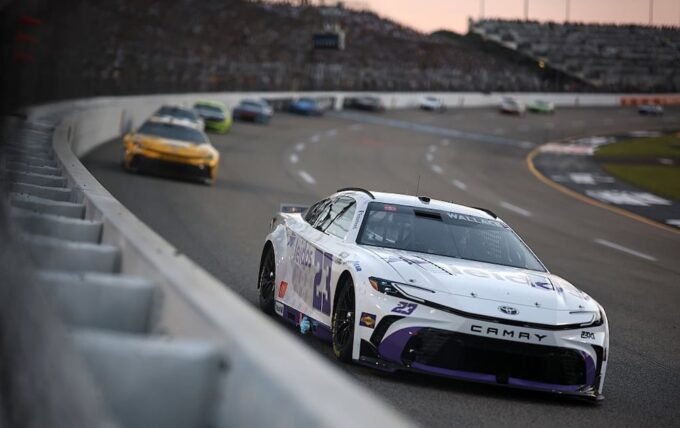
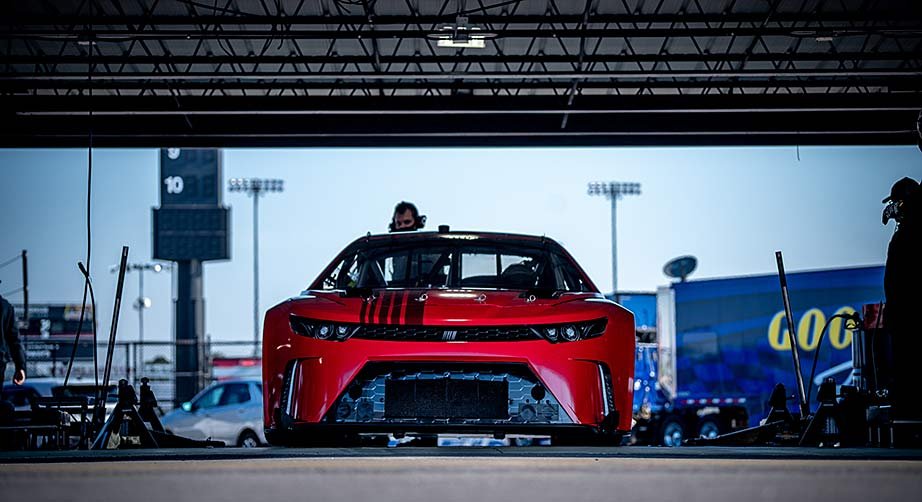
For over seven decades, the defining mechanical hazard of NASCAR stock car racing was sheet metal. In the eras of Gen 4, Gen 5 (Car of Tomorrow), and Gen 6 machinery, racecars were wrapped in handcrafted sheet steel and aluminum body panels.
If a driver engaged in side-by-side rubbing on a late-race restart, the stamped steel quarter-panel would buckle inward, pressing raw metal edges directly against the spinning right-rear tire.
Within two laps, the friction would slice through Goodyear rubber, causing a catastrophic 180 mph blowout that wiped out half the field in a shower of sparks.
When NASCAR introduced the Next Gen (Gen 7) car, it permanently replaced sheet steel with modular carbon-fiber and Kevlar-reinforced composite body panels manufactured by Five Star RaceCar Bodies.
That single material science shift has fundamentally altered driver psychology, pit road strategy, and late-race restart aggression across modern American stock car racing.
According to engineering analysis published in the NASCAR Official Next Gen Durability Report, the composite body has transformed stock car racing from an exercise in aerodynamic preservation into a relentless contact sport.
Sheet Metal Era vs Next Gen Composite Era: Material & Structural Comparison
| Technical Specification | Gen 6 Sheet Steel Bodywork | Next Gen Carbon-Kevlar Composite | On-Track Racing Impact |
|---|---|---|---|
| Primary Material Construction | Hand-formed 24-gauge sheet steel | Molded carbon-fiber / Kevlar weave composite | Eliminates sharp jagged metal tears; rebounds on impact |
| Elastic Deformation Recovery | Low (Permanently creases & stays deformed) | High (Flexible memory; pops back out into shape) | Cars bounce off outer concrete walls without cutting tires |
| Tire Rub Vulnerability | High (Metal fenders crush into rubber tire tread) | Near-Zero (Panels flex away or maintain wheel gap) | Enables aggressive three-wide door-slamming on restarts |
| Panel Replacement / Repair | Requires cutting torches, hammers & Bondo body filler | Modular bolt-on flange panels (Replaced in 4 mins) | Damaged cars return to the lead lap during pit stop cycles |
| Aerodynamic Sensitivity to Dents | Extremely High (0.010-inch dent ruins downforce) | Low (Retains aerodynamic wind-tunnel contour) | Trailing car no longer loses 5 mph of speed from minor contact |
| Manufacturing Cost & Parity | Multi-million dollar bespoke team fabrication | Spec single-source supply (Equal for all teams) | Levels the competitive playing field between big & small teams |
The "Pop-Back" Phenomenon: Bouncing Off Concrete Walls
The defining engineering characteristic of the composite body is elastic structural memory.
Under the previous steel regime, if a car brushed the outside SAFER barrier at Darlington or Bristol, the steel panel would crush into the rear suspension pickup points, permanently destroying the aerodynamic balance of the car for the remainder of the 500-mile race.
Next Gen composite panels are designed with multi-axial Kevlar weaves embedded in an epoxy resin matrix:
- Kinetic Energy Absorption: When a car strikes the wall at a 20-degree angle, the composite panel flexes inward by up to 75 millimeters, dissipating kinetic energy across the underlying foam energy-absorption blocks.
- Instant Elastic Return: As the car pulls away from the wall, atmospheric air pressure and material elasticity cause the panel to "pop" back out to its original aerodynamic mold line, leaving the paint scuffed but the underlying downforce surfaces completely intact.
The Chrome Horn Resurrected: Aggression as an Algorithmic Necessity
Because drivers no longer fear cutting a tire from body contact, the threshold for physical contact has shifted dramatically. On late-race green-white-checkered restarts at short tracks like Martinsville, Richmond, and Bristol, the "bump-and-run" is no longer a last-resort maneuver—it is the default passing technique.
Drivers regularly dive five car-lengths deep into corner entries, using their front Kevlar-reinforced bumper as a battering ram against the rear bumper of the race leader.
The composite bumper distributes the impact across standardized tubular chassis clip struts, knocking the lead car off the bottom groove into the slick upper lane without disabling either vehicle.
Eliminating the Million-Dollar Body Shop
Beyond on-track entertainment, the composite body revolutionized team economics. In the sheet metal era, premier organizations like Hendrick Motorsports and Joe Gibbs Racing employed dozens of master metal fabricators, spending hundreds of thousands of dollars rebuilding pulverized sheet metal bodies after every race weekend.
Today, damaged composite panels are unbolted from standardized chassis locating pins and replaced with pre-painted modular sections in minutes.
By eliminating the need for private aero body fabrication and wind-tunnel body reshaping, the composite body preserved team operating budgets while giving fans the most aggressive, side-by-side, paint-trading racing in modern stock car history.