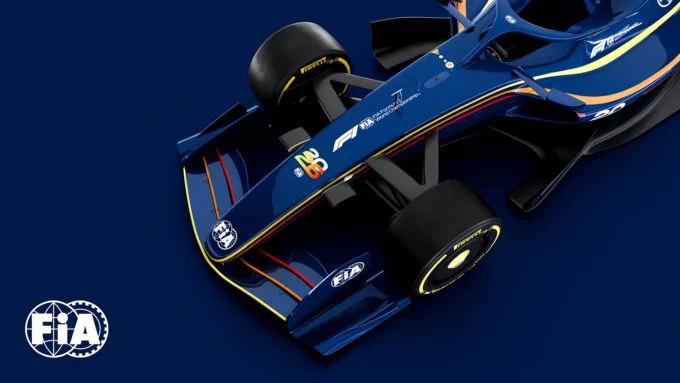
Formula 1’s 2026 power unit revolution represents the most radical electrical redistribution in the history of Grand Prix racing. By permanently eliminating the expensive, acoustically dull Motor Generator Unit – Heat (MGU-H) and nearly tripling the electrical output of the Motor Generator Unit – Kinetic (MGU-K) from 120 kW (161 hp) to a staggering 350 kW (469 hp), the sport has engineered a 50/50 power parity split between the internal combustion engine (ICE) and the hybrid electrical battery system.
While internal combustion output drops from roughly 560 kW to 400 kW, total powertrain output remains near the mythical 1,000-horsepower mark.
However, on track, this colossal reliance on electrical storage completely rewrites straight-line racing dynamics and overtaking strategy.
According to engineering disclosures published by Formula1.com Official Technical Blueprint, drivers can no longer rely on unlimited full-throttle battery deployment down every straight; energy clipping, state-of-charge management, and tactical harvesting now dictate who takes the checkered flag.
2025 vs 2026 Formula 1 Power Unit: Electrical & Mechanical Telemetry
| Engineering Metric | Current 2025 F1 Power Unit | New 2026 F1 Power Unit | Tactical Racing Consequence |
|---|---|---|---|
| MGU-K Maximum Electrical Power | 120 kW (~161 horsepower) | 350 kW (~469 horsepower) | Massively violent initial corner-exit acceleration |
| MGU-H Exhaust Energy Recovery | Unlimited harvest (~70 kW continuously) | Completely Banned (0 kW) | All electrical energy must be harvested purely via rear-axle braking |
| Energy Recovered per Lap (Max) | 2.0 MJ per lap (Braking only) | Up to 8.5 MJ per lap (Under heavy braking) | Braking zones must be aggressively extended to recharge battery |
| Internal Combustion Fuel Flow | Mass flow rate capped at 100 kg/hour | Energy flow rate capped at 3,000 MJ/hour | Enforces 100% sustainable non-fossil synthetic advanced fuels |
| Deployable Energy per Lap | 4.0 MJ per lap | Dynamic Override Mode (Supplemental burst) | Introduces strategic electrical push-to-pass overspeed windows |
| Power Derate / Clipping Speed | Minimal derate before 320 km/h | Steep electrical ramp-down above 290 km/h | Prevents battery exhaustion; causes cars to level off on long straights |
The "Clipping" Phenomenon: Why Cars Hit the Wall at 300 km/h
The fundamental physical reality of 2026 power units is that a 350 kW electrical motor draws enormous energy from the battery pack. At full 469-horsepower deployment, a standard 4 MJ usable battery charge would be completely drained in under twelve seconds of continuous full-throttle acceleration.
Down long straights like the Kemmel Straight at Spa-Francorchamps or the front straight in Baku, engineers must enforce aggressive power derating (known in paddock engineering as "clipping"):
- Initial Acceleration Surge (0–200 km/h): Out of slow corners, the full 350 kW electrical boost hits the rear wheels, producing instantaneous, neck-snapping acceleration.
- The 290 km/h Derate Curve: As vehicle speed crosses 290 km/h (180 mph), the FIA-mandated power curve forces electrical deployment to linearly decrease from 350 kW down to 150 kW by 320 km/h.
- Pure ICE Running at Top Speed: Above 335 km/h, the MGU-K shuts off completely to preserve energy, leaving the car powered solely by its 400 kW V6 engine.
To an observer trackside, cars seem to leap out of hairpins like rockets, only to hit a visible aerodynamic and electrical ceiling halfway down the straight.
Tactical Super-Harvesting: Lifting and Coasting to Attack
Because the MGU-H is gone, the only way to recharge the battery is through regenerative braking.
Under heavy deceleration, the MGU-K generates up to 350 kW of reverse braking torque, reclaiming kinetic energy that would otherwise be lost as heat through carbon brake discs.
However, on tracks with short braking zones (like Silverstone or Suzuka), braking alone cannot harvest the mandatory 8.5 MJ required to maintain full deployment.
Drivers are forced into "super-harvesting"—deliberately lifting off the throttle 100 meters before braking zones or running the ICE as a generator while cornering to charge the battery cells.
The Dynamic Override Mode: Modern Push-to-Pass
To replace the artificial aerodynamic advantage of the Drag Reduction System (DRS) rear wing flaps, the 2026 regulations introduce "Dynamic Override Mode."
When a chasing car is within one second of a rival at a designated detection point, the driver receives an extended electrical deployment curve.
While the leading car's electrical power derates at 290 km/h, the chasing car continues deploying a full 350 kW up to 337 km/h, creating an instantaneous 100-horsepower delta that enables clean, slipstream-driven overtakes into braking zones.
By transforming energy management from a background computer algorithm into a decisive wheel-to-wheel tactical weapon, Formula 1’s 2026 regulations ensure that racecraft, battery foresight, and tactical timing remain the supreme arbiter of victory.